Thursday, December 6, 2018

Ancient Maya Sites - a Memorable Visit

Maya civilization may have collapsed over a thousand years ago but Maya culture lives on. I was fortunate to visit three archaeological sites recently; two in Mexico: Tulum and Chacchoben, and one in Belize: Nim Li Punit. They provide a fresh perspective of this ancient and complex civilization that was famous for developing towering cities, an advanced written language, and a solar calendar close to the one we use today.

Tulum

Perched dramatically on sheer limestone cliffs above the turquoise waters of the Caribbean, Tulum is the only Maya city built on the coast not far from the resort town of Cancún. This 13th-century site was a seaport, trading mainly in turquoise and jade; its location providing major strategic advantages. It was one of the few Maya cities protected by a wall. Most prominent among the remaining structures is the castle, overlooking the coast, and a temple. North of the castle is a pathway that leads down to a sandy beach and the Caribbean Sea.

Chacchoben 

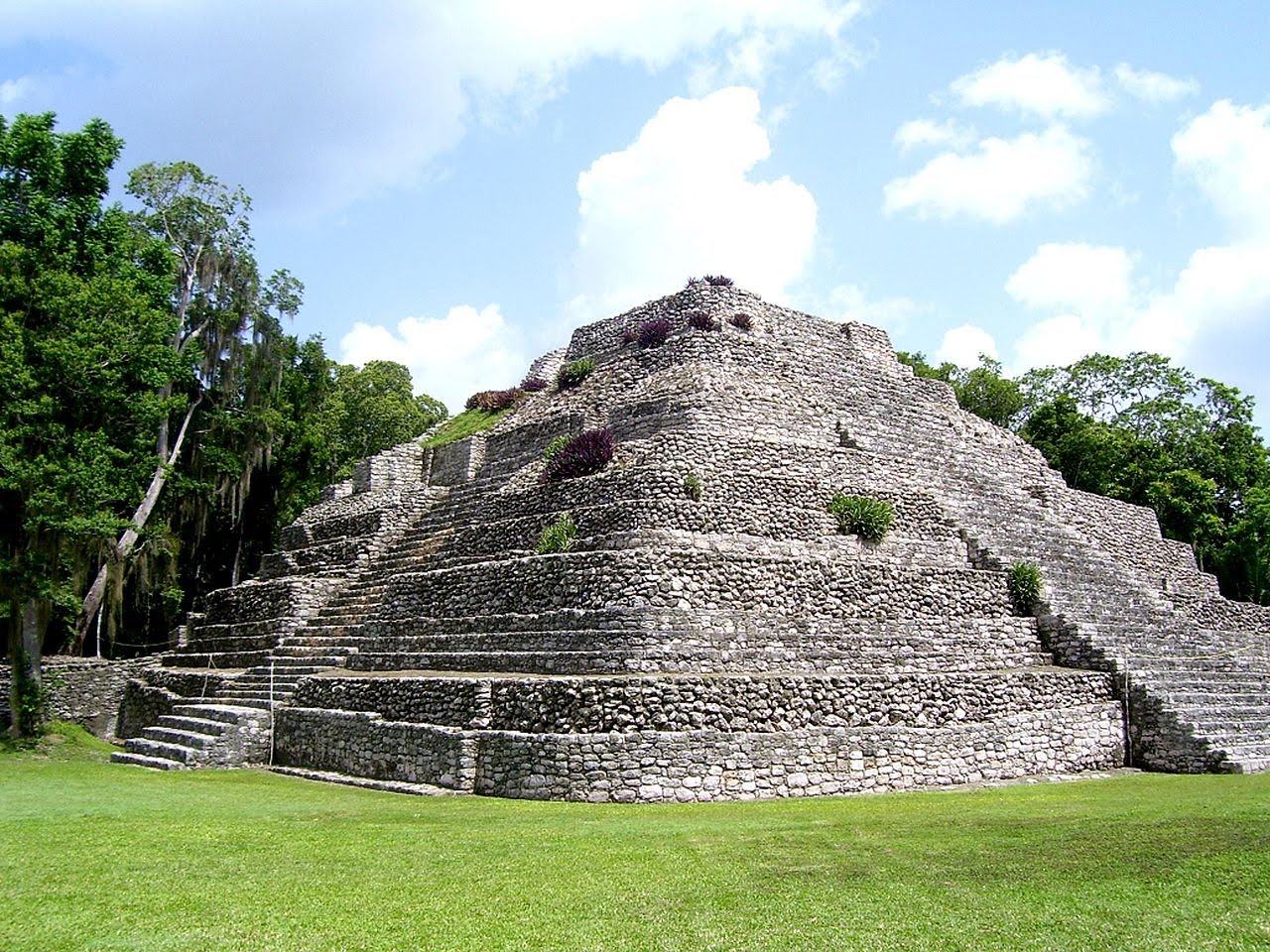
Deep in the Mexican jungle, Chacchoben is one of the best known sites in the Costa Maya region. The first human settlements in the area were around 1,000 B.C. By 360 A.D., Chacchoben had become the largest community in the region with a huge ceremonial center and ritual plaza. Only a portion of the site is open to the public; many temples are still covered with dense vegetation and awaiting their turn when the tourism department has enough funding to uncover and restore the structures, we were told!  

Nim Li Punit 

Nim Li Punit in Belize is a smaller site (5th to 8th century AD) that contains plazas, step-pyramids, carved stelae and square platforms for outdoor theaters as well as an excellent museum. The site also has a well preserved ball court with stone rings set high on the sides of the walls. Whoever got the ball through the rings won the game! There are stories, probably apocryphal, that the Maya used human (prisoner) skulls as balls! 

Classical Maya Age

Maya culture flourished from about the 9th to the 12th centuries. In its heyday, the Classical Maya age spread from modern day Belize to Guatemala and southeastern Mexico as well as western portions of Honduras and El Salvador. The Maya were already in decline (their “decadent” phase) when the Spanish invaded in the early 16th century. 

Using advanced architectural techniques, the Classic Maya developed elaborate layouts for their cities consisting of massive temple-pyramids, limestone palaces with vaulted rooms, stone plazas and stelae, ceremonial ball courts, and observatories. They built altars and towers everywhere connected by straight roads. If conditions were not propitious they moved elsewhere and set up another city! That’s why there are so many Maya cities all over the Yucatán peninsula. 

They developed a system of hieroglyphic writing and created books centuries before anything comparable appeared in Europe. There are many examples of Maya text found on stelae and ceramics. They also used mathematics and a complex series of interlocking ritual calendars. 

Cacao, Vanilla, and Maize

Historians argue that perhaps the greatest gift the Maya gave us was chocolate! To the Maya, chocolate came from the gods and formed a bridge between heaven and earth!  They first cultivated cacao 3,000 years ago. Spanish Conquistador Hernán Cortés, who caused the downfall of the Aztec Empire, learned of chocolate from the Aztecs, who in turn acquired it through trade with the Maya.

Vanilla, too - used by the Maya in the 1500s to flavor their chocolate drinks - was adopted by the Aztecs, who introduced it to Cortés. The forests of Southern Mexico are still the only place where the Vanilla orchid grows wild, pollinated by native bees that produce Maya honey. 

The Maya first cultivated corn or maize around 2,500 B.C. even though it was a food staple in Mexico 6,000 years ago.  In order to cultivate it, they abandoned  their nomadic life to settle in villages and form communities. 

Archaeological evidence indicates that black beans, sweet potatoes, squash, avocado, and papaya also originated with the Maya and then spread widely throughout Central America and the Caribbean before the Spanish introduced them to the world. 

Decline and Fall

The decline of Classic Maya centers on their political structure. Maya city-states were often at war with each other.  Rulers competed for land, subjects, and access to trade goods like jade, obsidian, and ceramics. Adding to political instability, were poor harvests, communicable diseases, ethnic conflicts, and the encroachment of tropical rainforests.

Drought and constant war caused the people to abandon their diverse and dispersed food production in favor of slash-and-burn cultivation close to their stone wall settlements, resulting in deterioration of their habitat and systemic collapse. 

Doomsday Predictions

According to our guide, deforestation and overpopulation caused the  Maya to collapse. “They messed around with Mother Nature,” he said. “Aliens didn’t take them!” He reminded us that a huge crowd of people gathered at Chichén Itzá (one of the largest and most visited archaeological sites, also in Cozumel) on December 21, 2012, waiting for the world to end!  He was spoofing a myth that the Maya had predicted some kind of apocalypse that day.

I recall frantic Internet stories that the Maya calendar had predicted the Earth's destruction with fears of mass suicides, natural disasters, and asteroids hitting the Earth! In the end, there were no catastrophes (natural or man-made) linked to the doomsday predictions. Instead, visitors went to Chichén Itzá to celebrate the start of a new and better era for humanity (that didn’t pan out either!)

Beliefs

At Chichén Itzá, the Maya combined math, astronomy, and architecture to build the monumental structure. Thousands gather for the Spring and Autumn Equinoxes every year to watch the image of a serpent appear when the sun strikes the mountain. The northwest corner of the pyramid casts a series of shadows that looks like a serpent crawling down. The Maya believe this represents Kukulcan, the serpent god.

The Maya were not afraid of death (which the Spanish found astounding) because they believed that they were going straight to heaven and would come back. They were obsessed with blood, ritual blood-letting, and sacrifice. 

Although they remained Christian for 300 years, Maya tribes went back to the old gods if they felt Christianity wasn't working for them!  It is interesting that religious concepts and rituals survived conversion to Christianity and often resulted in a fascinating mingling of pre-Columbian and Christian beliefs - similar to the famous Marcos Zapata painting of the Last Supper in Peru's Cuzco Cathedral showing Jesus and the Apostles preparing to dine - not on the traditional bread and wine, but on "cui" or guinea pig, an Incah delicacy!

"Father of the Mestizos” 

Gonzalo Garrero, considered a hero to indigenous Maya and a traitor to Spanish colonizers, has assumed mythic status in Mexico with books and films extolling him. 

In 1511, he survived a shipwreck and was taken prisoner by the local Maya at Quintana Roo. In time he turned against the Spanish, collaborated with the Maya and married a princess. Garrero declined invitations from Cortés to return, became a brave warrior for the Maya, and died in 1547 after fighting Spain for nearly 50 years. He raised three children with his Maya wife, Zazil Há, and is known as the “Father of the Mestizos” (mixed race Maya and European). 

Self-Determination and Survival

Present day Maya are raising awareness of their history, exerting their right to self-determination, and taking steps to preserve their heritage. There are 7 million Maya descendants today with 1.4 million considered pure Maya. 

Sadly, they have been under attack from commercialized mass tourism, relentless destruction of the rainforest (in Mexico), and encroachments on their land everywhere - resulting in vast dislocations.

In Guatemala, where they have suffered significant onslaughts, various Maya groups have come together to save their language and culture. Rigoberta Menchu, a Quiche Maya woman who lost most of her family to the country's fearsome "death squads," was awarded the Nobel Peace Prize in 1992. 

The Maya's increasing awareness that they are "one" people (spread over several countries) with the same shared history, rich past, and complex culture may be instrumental in helping them survive. 

Ludi Joseph
Washington, D.C. 
Dec. 3, 2018


Castle, Tulum
Temple, Tulum

Caribbean Sea below Tulum

Carved Stelae, Nim Li Punit


Carved Stelae, Nim Li Punit

Pyramid, Chacchoben

Entrance to Chacchoben Site


Monday, December 18, 2017

Goa: Dark History of the Inquisition

I was doing some research and discovered the existence of a group claiming to be descendants of those who were killed during the Portuguese Inquisition in Goa more than 400 years ago! They also insist - sans proof - that Jesuit cofounder, St.  Francis Xavier, of “the Apostle to the Indies and Far East” fame, was responsible for many deaths during the un-Holy Inquisition!  

Not to condone the brutality of the Inquisition, but these were the darkest of Dark Ages, one in which an over-zealous Church (influenced by and often in league with corrupt power-grabbing Southern European monarchies) ruthlessly stamped out non-believers. 

The Inquisition (Spanish, Italian, and Portuguese) was all about power - not religion, although many abuses were committed in its name. In Goa, it meant (among other things) that converts had to drop every trace of local customs and clothing.
    
Dissident Group

In 2014 - while the exposition of Xavier’s remains at the Basilica of Bom Jesu in Velha Goa (old Goa) was taking place - the same group of concerned citizens from Mangalore (Catholics, I believe), started a movement to ban exposition of the body. 

They claimed (disingenuously) to have proof of 2,000 or more deaths in the 16th century that they said had a connection to Xavier. They asked that his remains "not be venerated"; that he no longer be called a saint; that the body be removed immediately from public display; and - finally - demanded it be sent back to France! 

Navarrese Basque, not Spanish!

Why France?  Because, like his friend and co-founder of the Society of Jesus (Jesuit Order) - Ignatius of Loyola - Xavier was also from the Basque region (straddling northern Spain and southwest France), now part of Spain. Loyola was born in Castille and Xavier in the Kingdom of Navarre, making him Navarrese Basque, not Spanish, an important distinction.  (Until 2011, the region had its own violent separatist homeland movement, Basque-ETA, for more than 50 years).  

Both Loyola and Xavier were noblemen; both purpose-driven, focused on a vision to travel the world carrying the message of the Gospel. After missionary work in India, Borneo, Malaya, and Japan, Xavier died on Shangchuan Island before he could reach China.  He was canonized (declared a saint) nearly 500 years ago by Pope Paul V in 1622.  

Proof After 400 Years?

No doubt, the dissident group went public as a matter of principle and to raise awareness for their cause. Whatever iota of truth they may or may not have had on their side, this is too risky an action for these fraught times!

Almost all historical records were destroyed by the Portuguese when the Goa Inquisition was abolished in 1820. We do not know the exact number of those put on trial and the punishments they received. The few records that have survived suggest that at least 57 people were executed for religious crimes but no link to Xavier was ever found. 

It is true, however, that the Goa Inquisition was proposed by Xavier and perhaps that is the link they seek. 

Not a Joke!

In my not unbiased view, it’s only a matter of time before the “chaddiwala” fanatics targeting minorities in the north get hold of this explosive story and descend on Goa demanding that all Christians be reconverted to Hinduism, la seule foi vraie et sainte!  (That French phrase translates to “the one true and holy faith!” I used to say that about Catholicism - just kidding - not any more!)

Can you imagine what would happen if we let these crazies do reconversions, as they've threatened and tried in other parts of the country? It would destroy everything special and delightful and awesome about Goa: the unique vibe, the diversity, the peace, the sanity!

Mangalore  

A word about Mangalore and Mangaloreans. Like Goa, Mangalore in southern Karnataka, has been Christian for nearly 500 years with brief periods of Portuguese control although Christianity may have predated the Portuguese. Some of the earliest Christians fled to Mangalore from Goa to escape the Portuguese Inquisition and then later from the rulers of Bijapur and the Marathas. 

Being a rich and prosperous port for several centuries, with a flourishing trade (pepper, sandalwood, turmeric, ginger, cassia, cinnamon, coir), Mangalore became a bone of contention between British India and Mysore rulers, Hyder Ali and Tipu Sultan, during the 18th century Anglo-Mysore Wars. 

Compared to Goa - with which it has a long-standing friendly rivalry and shares a religion and language (Konkani), Mangalore's culture is less Westernized! 

Relics 

As a footnote, I want to add that a lot of people (myself, most certainly) are turned off (grossed out, even!) at the idea of “relics” (desiccated human body parts) being considered holy!  I remember going to the Vatican many years ago and seeing many such Papal relics (finger nails, hair, skulls) preserved in the crypt!  

The Catholics used to be big on this sort of thing a century (and more) ago; so were Muslims - not Protestants or Hindus. I was surprised to learn that Buddhist stupas also held relics (the tooth, for instance) of the Buddha or other saints - surprising since Buddhism is an offshoot of Hinduism. 

But, dare I say, Catholicism is moving away from these passé medieval practices into more enlightened times!

Iam olim serva scriptor!”

I don’t get this insane need to air old imaginary grievances!  Let’s keep the past buried in the past!  (“Iam olim serva scriptor!”).*  Let’s not destroy each other in the present for might have happened - or not happened - more than 400 years ago! 

Ludi Joseph
Washington, D.C.


Dec. 16, 2017

P.S. *I have to check with my padre uncle, the Monsignor, whether the Latin grammar is correct! 


Tuesday, December 12, 2017

Has Goa Lost It’s Soul?

My first couple of days I really thought Goa had lost its soul!  There were no native Goans to be found, no Konkani (local language) to be heard, not even the plaintive nostalgia-laden lilt of a mando (folk song)!  I was hard-pressed, distraught even, to find that Goa’s unique “culture” had somehow become subsumed in the larger ethos of the subcontinent!

It was so unlike my all-time favorite beach resorts, Hawaii and the Bahamas where the local culture is so immersive! In Hawaii, lei garlands, hula dances, aloha greetings and Hawaiian music (even the ‘wedding song’) are everywhere!  In the Bahamas it’s all about flame swallowers and fire walkers and Goombay music and Calypso! 

Not so in Goa! I had to travel all the way to the village of Aldona (near Mapusa) - my Mum’s ancestral home - to find real true-blooded Goans!  Thirty years ago, at statehood, Goan residents out-numbered visitors (domestic and foreign) by more than ten to one. Today, by my unscientific count, tourists seemed to far outnumber residents and native Goans!

Where Did the Natives Go?

Everybody in Goa is an “outsider” now - the entire tourist industry is filled with non-Goans. Where did all the natives go? Well to America, for one thing, and Australia and Canada and the Arabian Gulf and of course to Portugal and its former colonies of Brazil, Angola and Mozambique. 

Like other desis, Goans were hardworking and excelled at language skills, mechanics and accounting. They got jobs as government workers and bankers and educators - or as operators in the refrigeration and oil industries of Bahreïn and Das Island and Saudi Arabia - or that fave standby for every Goan, it’s become cliché : as bandsmen or crooners or chefs!  

The Best Musicians in the World!

The Bombay music industry, especially the orchestras, used to be crowded with Goans!  Like the Filipinos, they are the best musicians, singers and dancers in Asia! There are relatively few Goans who can’t sing or dance. I think it may be the most “civilized” thing about them: this ability to outsing and outdance most which also distinguishes them from the larger desi melting pot and what separates Goans from those who just can’t get Western music: either the accent is wrong or the feel is off (Usha Uthup being the rare exception)!  In general, Goans shine in this sphere!

We went to Martin’s, a famous restaurant in South Goa and were blown away by Kenny at the keyboard doing English and Hindi. After a bit of persuasion, he even did a mando medley for us (“Mogan Ason Borem,” “Undra Mujea Mama,” and “Ya, Ya, Maya Ya” of Remo Fernandes fame), although he claimed not to know the most well-known mando ever “Aum Saiba Poltodi Vetam!”  A version of that mando was made famous in the Hindi film “Bobby!” Hey, what’s that about - are young Goans forgetting their language and culture?   Shame on them! 

Goa Vibe

I’m happy to report that the fabulous sunsets, the moonrise over the Arabian Sea, and the golden sands are still as beautiful as I remembered them - despite the rampant and ubiquitous commercialization and the karaoke beach shacks full of rowdy male visitors jumping about, minus any musical or dance talent!  Yes, despite the vendors selling pineapples, cheap beads, hair braiding and footrubs, Goa still retains a certain “je ne sais quoi” ambience!  It is a laid back vibe that doesn’t exist anywhere else in India. It is hard to explain! Let’s just call it a mix of India and Portugal with young visitors shedding their conservatism and inhibitions in favor of freedom, mobikes, and western attire!  

The Portuguese colonized Goa for more than 450 years. How they withstood the Bahmani and Bijapur rulers, the Vijayanagar Empire and the Marathas - with only a small navy and military force - is a matter of conjecture, even today!  Fort Aguada - a well-preserved 17th century fortress and lighthouse near Candolim, overlooking the Arabian Sea, stands like a lonely but imposing sentinel. For more than 250 years a freshwater spring within the fort supplied water to passing ships, which is how the fort got its name ("aguada" means water).  

St. Francis Xavier

One of the most famous proselytizers and saints of 16th century Europe spent a significant amount of time in Goa. He was St. Francis Xavier, a Spanish Jesuit from the Basque region, whose religious missions took him as far away as India, China, and Japan. He died off the coast of China in 1552 and his remains were brought to Goa on its way back to Spain. After a series of incidents (deemed to be miracles), it was decided by the locals that the saint "wished" to make Goa his last resting place. The body (which is perfectly preserved, though shrunk), is kept in the Bom Jesu Cathedral in Old Goa and displayed for public viewing every ten years or so.

Portuguese Inquisition

Goa and Kerala are probably two of the only states where the highest castes were converted to Christianity. Most Indians are taken aback to hear that the Portuguese Inquisition (in its most tyrannical form) existed in Goa in the 16th and 17th centuries and lasted for more than 250 years or that the caste system is so prevalent with Christians (who are proud of being Brahmin, forget JC and brotherhood and equality!) Even now, you can find the instruments of the Inquisition in the museum in Panjim. The Jesuits were clever enough to realize that if they got the landowning educated Brahmins to convert, the rest would follow. 

In 1961, when Nehru’s threat of sending in the Indian army resulted in almost overnight independence from the Portuguese, the ratio in Goa of Christians to Hindus was perhaps 40-60. That number has reduced dramatically to less than 25 percent of the population with many Christians opting to go overseas. One can hardly blame them. 

Like my Tamil-speaking Dad (a non-Goan, writer and avid student of history) was fond of saying, "the Portuguese did nothing for Goa." There was no infrastructure of any kind: schools, hospitals, roads, bridges, electricity, running water. All Goa had were churches and bars! The Goans had no option but to emigrate in large numbers. My Mum's entire family went to British India to attend high school; the girls went to Loreto Convent in Calcutta and the boys went to Don Bosco's in Bombay.

The 21st Century Hits Goa!

Even though Christians were always fewer than Hindus, they wielded a lot of political and economic clout that belied their numbers. The Goans who chose to remain behind were teachers and educators. I wonder what the deceased members of the Soares family (Mum’s family) would make of all the changes in Goa. The ancestral home is very dilapidated and ramshackle and that for sure would have broken my grandmother’s heart!  The land and house and grounds, including the cashew plantations, have now been donated to the local school - but that’s not the only thing that’s changed. 

Indoor plumbing and electricity and roads and schools have come to the more remote areas of Goa and (to my astonishment) people actually speak Hindi!  That’s huge!  I was also glad to see that many old-timey desserts can still be found: bebinca, and dodol and, of course, Goa's most famous (alcoholic) product, cashew feni is alive and well, still relatively inexpensive and still consumed in large quantities by native and visitor alike! 


Most importantly, however, Goa is a haven of peace and Goans continue to live with each other in perfect harmony - whether they are celebrating Carnival or Christmas or Dassehra or Eid! One can hardly minimise the importance of this after the talk of "love jihad" or fictional Queen Padmavati or a slew of imbecile controversies plaguing other parts of the country! 

Ludi Joseph
Dec. 8, 2017


Sunday, November 26, 2017

November in Delhi: not what it used to be!


WiFi Sucks!

Connectivity is so poor in Delhi, worse than last year! I’m looking at my swanky new 4G iPhone and it has one bar and says Airtel; one second later there are three bars and it’s says Vodaphone; another second later it says “No Service” which persists for half an hour!  It’s the same with my iPad and other iPhone. And this is at the Hilton!  I couldn’t use What’s App at the airport. I had to resort to the most expensive international calling feature to alert my friends outside. My devices are physically inches apart and “airdrop” takes forever to work. I could go on, but I’ll stop!  Like I’m so fond of grumbling, WiFi sucks here, oh-so bad!  

Such an irony when you think that the entire world is filled with smart Injuns creating IT companies or sitting on boards of top ones in Silicon Valley - never mind all those wallahs toiling away in the Chennai back offices of Visa, AMEX, Master Card, the World Bank - keeping the entire planet’s IT systems buzzing so beautifully!  It is rare at the IFC to ever have a communications failure, so - if they can get the entire world to function - why can’t they get their blooming act together in this country?  My friend Girish A. says “it’s all politics” - of course it is!  He’s gone back to using his landline! How pathetic is that?

Traffic is a Nightmare!

Nobody uses GPS, the traffic is horrendous, the pollution is actually visible, but more on that later!  It took us an average of two plus hours to get to anywhere!  Most of it was bad driving but traffic is truly a nightmare!  No one stays in their lane, I was trying to stop myself gasping out loud whenever I saw another vehicle get within a hair’s breadth!  How we survived I don’t know!  I guess it wasn’t my time!  I’m not sure what is more stressful: the traffic, the way folks drive or just the general dirt and grime and dust that gets in one’s eyes and hair and clothes!  It’s as if one gets washed with a film of filth every time one goes outdoors! 

Statistics compiled by the Research Wing of the Ministry of Road Transport and Highways in its report titled ‘Road Accidents in India 2016,’ showed that Delhi had the highest number of deaths — 1,591 — due to road accidents which peaked at 8,623 in 2014 before coming down to 8,085 in 2015 and 7,375 in 2016 (The Hindu, Sept. 7, 2017). The decrease in deaths is due to an increase in vehicle population, say experts. The number of vehicles is more than 10 million (over 94 percent privately owned). This is shocking when you realize there is no proportional increase in road space in a city that houses nearly 20 million residents!  Lax enforcement and speed are considered the main killers, say road and design experts. 

World’s Most Polluted Capital!

According to Bloomberg News, air pollution is estimated to kill more than half a million Indians and Pakistanis every year, while the World Bank has said environmental degradation costs India $80 billion annually. We have all heard of illegal crop burning, coal-fired power plants, vehicle pollution, and the PM2.5 particulates in the air at their most hazardous level of 400 - 40 times the safe levels recommended by the WHO!

A recent report in the Lancet medical journal said pollution had claimed as many as 2.5 million lives in India in 2015, the highest in the world. For some years now, Delhi (not Beijing) is “the world's most polluted capital” according to the WHO, with pollution levels that regularly exceed Beijing’s. 

I experienced the foul acrid smog within a few minutes of standing outside the airport waiting for my ride. It was a disgustingly toxic combination of vehicle emissions from diesel mixed with smoke and dust. I was outdoors less than half an hour but my lungs were filled and I was choking with the putrid fumes!  

I felt this again and again whenever I went outside. It is gross, it is relentless, it is everywhere - and it is inescapable!  Masks don’t help, really!  Indians are literally killing themselves - and future generations - without any evidence that things will ever get better! 

Conclusion 

I do a blog every time I come to India and, sadly, things only seem to get worse!  I am disheartened not just by the lack of any kind of visible progress from last year or the year before or the year before that! The current culture wars (beef eating, women in movies) and the all-too-present specter of mob rule - versus the struggle with the more liberal secular forces of the kind of India I grew up in - are coming to a head like never before.  How will it end?  Hard to say. 

Final thoughts: for me, what is worse is to see educated citizens (including friends and school mates) in complete denial of what’s going on! They even make excuses for the lynchings!  It’s hard to have an honest discussion!  Instead of acknowledging problems they’re talking about what’s wrong with America!  Like the media spent weeks dissing the U.S. over the silly sari controversy!  But I’m optimistic. Maybe next time I’m here, things will be better!


India in November!

FAPS Reunion

We had a wonderful school reunion lunch at the 5th Maratha Light Infantry Officers’ Mess. Our former headgirl Anupama Miglani and her husband Jogi (Gen. JJ Singh, previously Indian Army Chief, Governor of Arunachal and Ambassador to Algeria) really went to town with the arrangements. 

I’d forgotten how well the Indian army far outdoes the Brits and other former colonies with pomp, pageantry and splendid displays of ceremony!  We were elaborately salaamed and saluted everywhere we went!  They even bring the leg up in a salute! (If we weren’t in  a car then, I might’ve tried to emulate and fallen on my face!). The fife and drum band were particularly masterful. The General, a prolific and successful writer, spoke about his second book and his areas of focus for the future: Indo-Pak relations, for one. 

Formed in 1922 by the British, the Maratha Light Infantry fought with distinction in World War II and saw action in North Africa, Eritrea, Mesopotamia and Imphal. Two soldiers were awarded the Victoria Cross. The General and I were speaking about WWI and WWII battles and how often the sacrifice of Indian soldiers is forgotten!  For example, when I visited Gallipoli in Turkey (WWI) I had to remind the tour guide that Indians had also lost their lives along with Kiwis, Aussies, French and British soldiers. The General had been recently to Monte Cassino in Italy to pay his respects to fallen Indian soldiers. The Commonwealth War Graves Cemetery outside Cassino is a burial place of British, New Zealand, Canadian, Indian, Gurkha, Australian and South African casualties. 

Deepak’s Party

Former FAPS headboy Deepak Kochhar and his wife Anita celebrated their wedding anniversary with an afternoon party at their beautiful home. There was an excellent Goan DJ, Edwin Fernandes and his partner doing English and Hindi songs and guests joining in. The food was so good: makki ki roti, sarson ka saag, moong dal halva! Deepak’s glamorous film actor-cricket anchor son, Samir Kochhar, was present. Wonderful to meet him and daughter Diya. 

There were tall trees (maybe mango, jamun, neem) and birds chirping away so loudly they almost drowned out the singing at one point! I could actually see a flock of parrots! One wonders how they survive with all the pollution - I guess they make do!  The weather was great: a balmy winter afternoon with sun, dappled shade, a light breeze, an almost clear sky!

Yes, think twittering birds, temps in the 70s, a soft haze, Delhi like it used to be a long long time ago!  One could almost forget the nightmarish traffic only a few feet away beyond the shamiana at the gate and the loony Sangh Parivaar Rajputs ready to cut off noses and heads to defend the honor of fictitious princess Padmavati! Yup! That’s Inja for you: absurd and contradictory and heartbreakingly far away from its Independence Day 1947 ideal!  

Ludi Joseph
Nov. 26, 2017


FAPS Reunion


Deepak's Party