Thursday, March 19, 2020

Eating in the age of Coronavirus; try out this comfort food, Buckwheat and Mushroom Porridge!  

If you’ve never tried buckwheat before, now’s the time! The seeds (or groats) come from a broad leaf plant related to rhubarb and is an excellent source of Fiber, Protein, Iron, Rutin, all the Amino Acids and, best of all, Zinc, to boost your immune system in this time of crisis! Most importantly, it’s gluten free! (Despite the name, it’s not wheat!)

See ingredients below. To prepare, wash 1 8-Oz. cup of buckwheat seeds in cold water and add to 3 cups of boiling water and stock. Cover, reduce heat, and simmer until cooked: about 30-40 minutes. Add cumin, turmeric, mushrooms, potatoes, garlic, ginger, Bay leaves, pepper, and salt. The almond flour is added in the last 10 minutes of cooking. Keep stirring if it’s too thick; add more water as needed. After removing from the heat, add the olive oil, coconut oil, cilantro, and lemon juice.

Ingredients:
1 cup washed buckwheat
4-6 cups of water
2 cups sliced white mushrooms
1 cup julienned potatoes
4 Bay leaves 
1 cup vegetable/other stock
1/4 teaspoon ginger paste
1/4 teaspoon garlic paste 
1/4 teaspoon cumin powder
1/4 teaspoon turmeric powder
1/4 teaspoon black pepper
Himalayan or other salt to taste
3 tablespoons almond flour

Garnish:
2 teaspoons organic olive oil
2 teaspoons coconut oil
Fresh cilantro or other leaves
1/4 cup lemon juice

“Kuttu”

Note that buckwheat (known as “kuttu” in India), gives a real nutritional boost to the diets of non-meat eaters as it has all the B Vitamins (that vegetarians such as myself) sometimes lack, as well as Magnesium and Manganese. 

You can get loose buckwheat from Whole Foods or packaged from Vitacost. They’re equally good, either loose or packaged. I’ve tried both. 

Tips

It’s best to use a stainless steel pan with a heavy base so the porridge doesn’t catch on the bottom of the pan. If you’re not a mushroom fan, try asparagus, cauliflower, cabbage or broccoli - fresh, frozen or canned. Note also that the almond flour and potatoes take away the slightly acrid/bitter taste of the buckwheat. My folks loved it, including my sister Lorna who is the cook in the family and rarely likes anyone else’s cooking! The trick, I think, is to overcook just a little bit so it’s slightly sloppy, but ever so delish (even if I say so myself)! 

Anglo Indian Recipes

I posted it on Mum’s “Anglo Indian Recipes Group” page on Facebook and she got more than 100 “likes” and 25+ interesting  comments from real chefs (unlike me!) who wanted to know what the garnish was: was it “valchi baaji or spinach poi” asked Canada-based Antonio. (They’re all Konkani words - the language spoken in Goa, me Mum’s birthplace)! Apparently it was “poi” which Mum grows in a window box. We sent him the pic and he was so excited - was sure she was India-based, not Flushing, NYC-based! (Wonder if that took away from the magic of the poi?)!

Versatile

Buckwheat can be very versatile. Group members said it sounded like a recipe for “daal” (lentil) or “kichhdi” (rice and lentils). Another said he makes an oat porridge with similar ingredients. The recipe is very adaptable. Besides oats, other grains can be used such as quinoa, millet, and so on, but their protein content is not as high, I think. (Like I said, always looking for protein sources)!  My friend Girish from Delhi wrote that they eat “kuttu ki rĂ´ti” (buckwheat bread) when they are fasting while others make the flour into pancakes. 

Bare Shelves in Supermarkets 

One needs to be flexible, especially when supermarket shelves are bare!  Carmen, a friend of mine in London, told me that the grocer she goes to had nothing in the pasta/rice aisle except buckwheat, which she bought - and wasn’t it fortuitous that my recipe reached her just then?

These are extraordinary times, indeed! You know things are serious when they shut down the Taj Mahal in India!  We’ve been advised to stay home, “shelter in place,” practice social distancing, and do whatever is necessary not to spread the virus. Catch me cooking in other circumstances! Now’s the time, for sure!  

New York City
March 18, 2020


Mum’s famous window box with Spinach Poi!  


Buckwheat Porridge with Poi Garnish 


Lorna, Moi, Mum

Mum and I

Sunday, March 1, 2020

Trek to Big Schloss

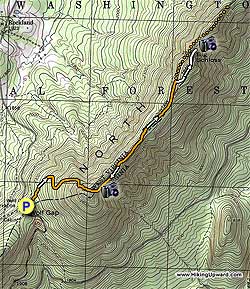
I recently took part in a trek to Big Schloss, a peak in the George Washington National Forest on the Virginia-West Virginia border. A 3 hour car ride from Washington D.C. (2 hours from Northern Virginia) takes you to the trailhead at Wolf Gap Campground where one begins the 4.5 mile hike and climb to the peak (2,964 feet). 

The start is insanely steep and rocky: the ascent in the first 0.7 miles is over 1,000 feet! After that, it levels out and the hike along the ridge is much easier. Another shorter climb gets you to a picturesque wooden bridge; then a short rock scramble and I had reached the summit and the stunning picture postcard views! 

The rock outcropping or spur was named by German settlers in the area. It really does look like a schloss, or castle with turrets.  

My companions were a couple dozen members of the World Bank 1818 Hiking Club. Most were experienced hikers casually chatting about treks they’d already done or were going to do in Patagonia, Tibet, Mt. Kilimanjaro, and Norway. 

Cardio Workout

Unlike moi! I huffed and puffed the whole entire way; it was a challenge and a real cardio workout! The rocky terrain at the beginning of the hike was treacherous! My feet kept slipping on slush and finding holes burrowed by animals. I took a couple of small spills and skinned my knees, but nothing serious. 

My friend Xiao Ye lent me one of her hiking poles which really helped on the downward journey as it took the strain off my scraped knees. 

Clueless and Cold!

I wore too many layers and was soaked through! It was 35 degrees F to begin with and warmed up another 10 degrees by the afternoon. But, as soon as I started climbing, I got very hot, very fast. Removing the layers would’ve meant carrying them in my backpack, so I left them on!  

Next time, I would definitely go lighter and ditch most of the contents of my backpack - everything except two liters of water, camera or phone to take pictures with, Tic-tac or other mints, and lip balm. I carried snacks but brought them back untouched. Other unused items were a poncho, phone charger, Band Aid, sunscreen, and insect repellent. 

I would also wear clothes with multiple easy-to-reach pockets, such as cargo pants. 

New Togs!

In anticipation of the hike, I splurged on swanky new Salomon hiking boots, Smartwool merino socks, and REI hat and gloves, and broke them in the previous day during a day-long trek from the Lincoln Memorial to Capitol Hill and back - and all the newer memorials in between!  

I was thinking of previous hikes I’d done a long time ago in Nepal: trails in Pokhara, the Everest Base Camp; and India: Lahaul-Spiti (Himachal Pradesh); Valley of the Flowers, Hemkund Sahib, and Kedarnath (Uttarkhand).  

They were all accomplished sans hiking poles or any smart outdoor gear and equipment.  

We had plain old sneakers then which may not have even been waterproof!  I remember wearing woolen “inners,” multiple sweaters and parkas, and buying a blue and white (slightly used) ski jacket in Nepal before starting the Annapurna Circuit and proudly using that in all my treks. Those were the days!

“Chai” Shops and Litter 

I also remember the ubiquitous “chai” shops all over the Indian and Nepalese trails. The “chai” or tea was served sweet and milky, flavored with ginger and “tulsi” (holy basil), sometimes pepper; along with glucose biscuits and hard boiled eggs.  

I recall biting into more than one not-so-fresh egg on the arduous trek to Gurudwara Shri Hemkund Sahibji, a Sikh place of worship, at an elevation of over 15,000 feet in India’s Garhwal Himalayas. 

The tea was so welcome then but perhaps impractical in today’s world! Imagine the chaos and litter that tea stalls would create on the narrow trail to Big Schloss? Good thing they weren’t there!

Looking back at treks in Nepal, I remember my first time in Pokhara with a group of New Zealanders and being offended at the incongruous sight of plastic bags littered everywhere! Those were less PC days, before the threat of imminent Climate Change, unchecked commercialization - and looming environmental disaster!

Trekkers help the Economy

In North America, outdoor enthusiasts, especially trekkers, have helped to transform and grow rural economies and make them more sustainable.  

Trekkers support small business owners when they visit recreation areas and pay for entrances fees, licenses and other travel-related expenses such as airfares, rental cars, lodging, campgrounds, restaurants, groceries, gasoline, souvenirs, and much more. 

According to an Outdoor Industry Association study, Americans spend $646 billion on outdoor recreation each year which directly results in more than 6.1 million direct jobs and $80 billion in federal, state and local tax revenue. 

Rest and Ibuprofen!

The back and forth on Big Schloss took about 4 hours. My companions went on a hike to another nearby peak that afternoon, Tibbet Knob, but I opted out in favor of rest and ibuprofen!

My recovery was quick. Two days later I did another 3 hour trek along the Potomac. Good times!  

Ludi Joseph
Washington, D.C.
February 26, 2020


Thursday, January 30, 2020

Chola Theyyam

On my final night in Kannur, we pulled an all-nighter at an eight-hour marathon of Theyyam rituals in Chola Village just outside the city. 

The word Theyyam - which comes from Devam or god - refers to complicated religious rituals that channel the deity with dance recital and invocation.  People believe that, when the performer puts on his mask, face paint, headdress, and costume, and starts to dance, he actually becomes the god whose story he is enacting!

Theyyam is held once a year from October to April and is unique to Northern Malabar. The dancers, musicians, and priests are from specific lower castes who - along with their heirs - have the sole right to enact their roles. The duty and honor to perform Theyyam is said to have been conferred on these communities exclusively by ancient rulers. 

I also discovered in my research that the Paniyars, an indigenous Dravidian tribe native to this region, may have been permitted at one time to participate in these rituals. I’m unaware if they still do but it speaks to how ancient these rituals are and how they’ve been handed down through the generations! 

Outdoor Location

Theyyams are not traditionally held in temples but in outdoor locations associated with Nature worship such as banyan trees and sacred groves (kaavus). 

The venue we visited was a 50 square yard open space with stadium style seating. Old newspapers were spread on stone slabs to protect against dirt, cold, and morning dew. The temps dropped considerably and I was glad to have my hoodie!  On the road outside, cars were parked for over a mile in either direction. 

Veeran, Gullikan, and Puthia Bhagvathi!

Three Theyyams were enacted covering the legends of Veeran (a warrior), Gullikan (a form of Shiva), and Puthia Bhagvathi (a form of Kali). All are actually older pre-Vedic deities that were associated with non-Brahminical worship and later adopted into mainstream Hinduism. 

As I had seen before at the Parassinikadavu Muthappan Temple, the dancers carrried  clubs and shields; advanced and retreated; jumped up on pedestals and performed with such verve that they often had to be physically restrained by their attendants!

Not every Theyyam is a story of a deity. Some are dedicated to local folk heroes and even martyrs who were unjustly harassed or killed by higher caste people. As opposed to Sanskrit chants, the songs are sung in Malayalam and can be easily understood. 

The Theyyam performer blesses the drummers, village elders, organizers, and “karnavars” (male heads of family, usually maternal uncles) who sit in a small enclosure. He then turns to the general public, performing benedictions, distributing flower petals, and accepting donations in return. Everyone gives a few rupees. 

The entire village pays for Theyyam. Besides small donations from local residents, Keralites from the region who work in Arabian Gulf countries send large sums of money to ensure that Theyyam traditions are preserved.

Grand Finale 

For the grand finale, the Theyyam performers came out wearing gigantic headdresses. Puthia Bhagvathi had a headdress with 16 flames to begin with; when he returned, there were multiple flames coming out of his lower body as well! 

At one point there was a procession with men carrying ceremonial umbrellas and children with coconut, marigold, and other offerings. One of the persons, known as a “vellichappad” (an intermediary, also a pre-Vedic concept), appears with a scythe and performs a cosmic dance.

Gullikan was full of pep, running around like a teenager! He wore an amazing green headdress made from latticed coconut palms that was at least 50 feet tall!  We had caught him earlier (large, a bit grumpy!) resting after his Thottam* performance and tried to sneak a few pictures but were scolded for not asking permission before we did.  After asking permission, he relented!

The younger and more energetic performer of the Veeran Theyyam did cartwheels and somersaults in and around the campfire while five drummers provided accompanying music. 

I also noticed a woman hold up a coconut branch torch. She was the only woman participating in the ceremony.  

At the very end, the younger priests - having taken a cold dip in a nearby tank to further purify themselves - rapidly jumped in and out of the dying embers of the campfire causing huge sparks and cinders to fly around, besides a general commotion. This was quite a startling sight and was, somehow, a fitting end to the night’s events! 

Fireworks 

The only 21st century inclusion in a ceremony that was over a couple of millennia old was modern fireworks! There were three loud and totally unnesessary (I thought!) bursts of firecrackers that exploded over our heads for far too long, polluting the air. 

Relevance

At the heart of Theyyam is a rural agricultural lifestyle. The songs speak of a culture that is pre-Vedic, pre-Brahminical and combines legend and history. They talk about people and their problems, their relationship with Nature and each other. 

The performance is usually followed by a feast, an example of sharing resources and coming together as a community.

Theyyam is also helping to preserve the ecosystem and biodiversity of the sacred groves where they are performed. 

Younger generations want Theyyam traditions to continue. We heard that people from the village who live overseas return regularly for Theyyam season. An audience member we met had flown in from Melbourne, Australia to attend. He said the reason the performers were so proud to participate was because it’s the one time they can command the respect of the entire village as both high and low caste people attend. No other event confers so much honor.  

For a short period of time, the low caste (SC/ST)** performer becomes a living god, and upper caste people pray to him!  It speaks to an inclusiveness and a broad mindedness one rarely sees. 

I can’t imagine TamBrams (slang for Tamil Brahmins!) attending or finding such events worthwhile but the cultural experience is truly remarkable!  

Theyyams could also be a lucrative source of revenue for the government if the tourism department got involved in organizing tours. 

When we departed at dawn there was a sharp nip in the air. Most of the audience had already dispersed with only a few bleary-eyed men, women, and  kids braving it out...

Ludi Joseph
Kannur, Kerala 
Jan. 26, 2020


* A Thottam is a mini-Theyyam, a sort of precursor, performed in advance of the main event. See videos below stills: priests jumping in fire; Gullikan Theyyam; Veeran Thottam; Gullikan Thottam; Veeran giving blessings; and Veeran Theyyam.

** SC/ST stands for Scheduled Castes and Scheduled Tribes. Their rights are enshrined in a schedule in the Indian Constitution; hence the term! They are also referred to as Dalits or Adivasis. 

Gullikan

Puthia Bhagvathi

Campfire


Gullikan sans Headdress 
Gullikan with Headdress 

Veeran getting ready 


Saturday, January 25, 2020


Visit to Coorg

The drive from Beykal to Coorg and the climb into the Western Ghats was picturesque alright but also nerve-wracking, particularly negotiating the steep turns or “hair pin” bends, as they are quaintly called!  Few vehicles ever yield and it was a relief to reach Madikeri intact!  Ramesh, who did all the driving, was remarkably cool and so was Sudha, his wife. 

Coorg (now called Kodagu, with Madikeri as headquarters) is a hilly district in Karnataka state located in the Western Ghats. The average elevation is about 3,000 feet. Compared to the Kerala Coast from where we came, Coorg is much cooler and the humidity is low. At Madikeri, we stopped by Raja’s Seat, the lookout point, and the 17th century fort captured from the Hindu ruler and rebuilt by Tippu Sultan before it was taken over by the British. The CSI church inside the fort is now a museum. 

Starry Skies!

When we arrived at the Bamboo Club in Pollibetta, in the pitch dark, we had a rare treat: a sky full of some of the brightest stars I’ve ever seen that looked almost unreal in their clarity and nearness!  I thought I could even distinguish Ursa Major or was it Ursa Minor?  Coming from the haze, dust, humidity, and pollution of the city, this was a very welcome sight. It helped that the electric lights at the Club were switched off, adding to the starlight! 

Coffee Plantation

Kittu (Monappa Guddanda) and his wife, Padmini, own a coffee plantation, about 7 clicks from the Bamboo Club, near the Margolly Estate where they have lived for over 50 years. His father, once a revenue official, bought the plantation in the 1960s. 

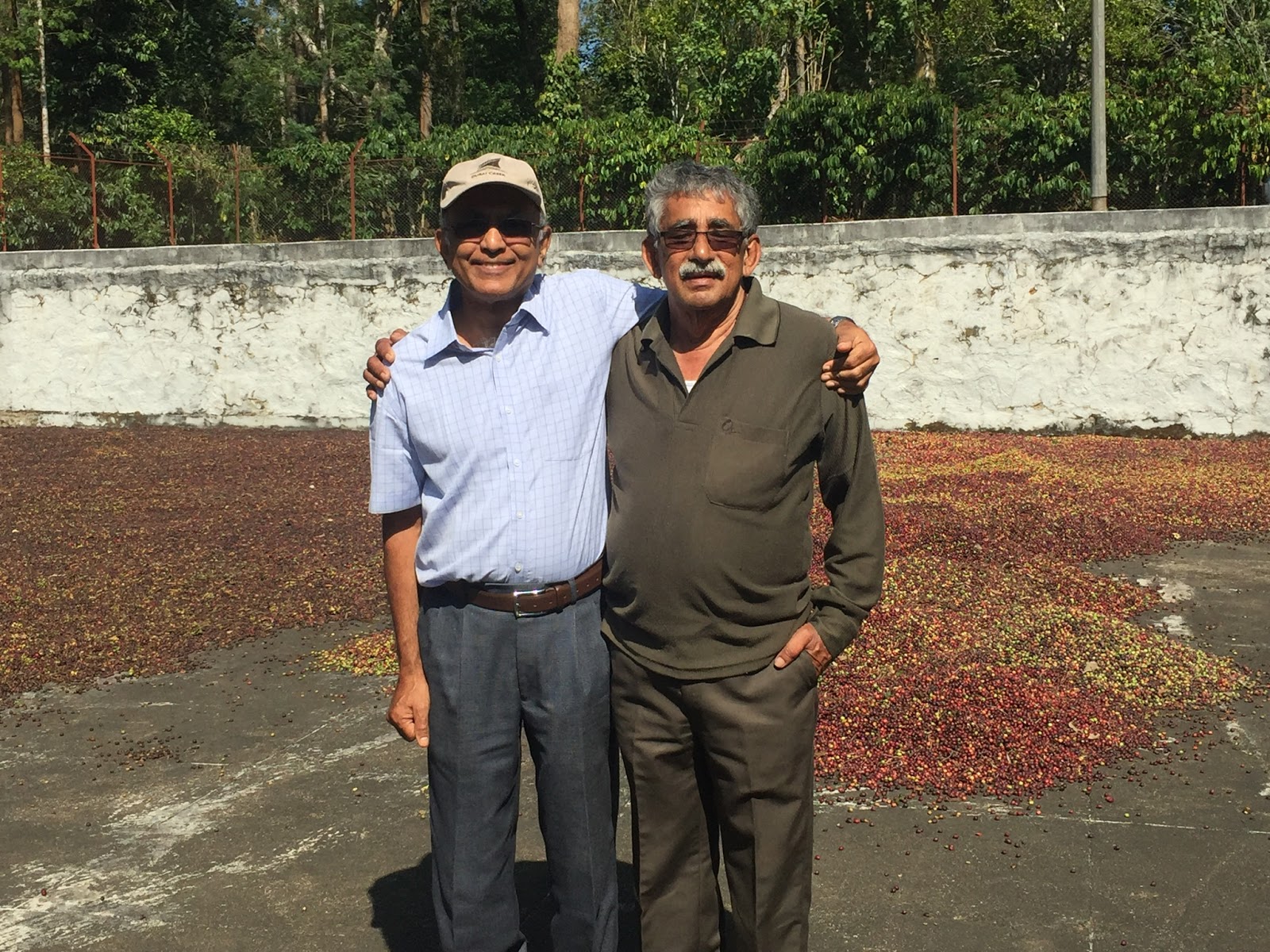
After a delicious brunch consisting of a wide variety of Coorg food, Kittu took us on a plantation tour. We saw mostly robusta (and a few arabica) coffee plants laden with swollen red berries as well as peppercorn vines, orange and lime trees, and silver oak. Workers collected the coffee berries: they spread a sheet on the ground just below the plants and stripped the berries from the branches with their bare hands. 

The berries are later dried in the sun. After drying and bagging, the beans are sent for processing which includes curing or husking. Other plantations pulp the berries, releasing an overpowering musky scent.

A coffee plant can yield as much as 10 kilograms (kg) of coffee; altogether, Kittu’s 40 acre plantation can yield 80,000 kg, if the crop is good. About 70 years ago, only rice was cultivated in this region. Coffee is a fairly recent introduction, courtesy of the British. 

Labor 

Planters hire migrant workers, many of whom are Kerala Muslims. They are paid a daily wage of Rs. 325 for women and Rs. 400 for men. If they pick coffee, they are paid by weight: an average of Rs. 3 per kg. Daily remuneration per worker could reach about Rs. 600 per day (less than $10)!

We were told that the state government provides free rations, school education, housing and other kinds of allowances to the workers.  Kittu said he needs to “treat them like friends!”  If they are scolded, they get offended and might not come back the next day! 

Samadhi 

We saw the “samadhi” of Kittu’s parents, G.C. Cariappa (who died in 1977 at the age of 82) and his wife G.C. Nanjamma (who died 20 years later in 1997 at 94). A small portion of the ashes of the dead are interred in a special plot with memorial stones, known as a “samadhi,” similar to Rajput cenotaphs in Rajasthan. 

Padmini, a former teacher, was a very kind and gracious hostess. About 10 years ago, Sudha and Padmini taught together at Lourdes School, a local high school run by Carmelite nuns that catered to the children of plantation workers. 

Wild Elephants

Wild elephants are a constant problem for coffee growers. They slide down slopes, trampling the plants and frightening away workers. They also come around to people’s homes following the smell of ripening jackfruit (or papaya or banana) but don’t usually attack humans unless they are harassed. Last night we saw road signs and wild elephant alerts, warning drivers about their presence in the area. 

As humans encroach into their habitat or their food sources (such as bamboo trees) dry up or diminish, elephants roam the plantations looking for food. They are intelligent animals and have figured out how to access electrical fences that are erected to keep them out. They pick up stone poles (connecting the wires) and throw them aside or hang them on trees. If they mistakenly touch the wires they scream out in pain at the electric shock, Sudha said. Stronger members of the herd usually help the weaker ones. 

Lazy Elephants!

Once they get used to easier to reach food sources in plantations, herds abandon their traditional food, even when bamboo is plentiful and water is available - rather like tigers after they become man-eaters, as per Jim Corbett’s book “Man-Eaters of Kumaon!”  

Besides getting lazy, elephants also get angry when they are chased out by village folk beating drums and lighting fire crackers. When that happens, a lone animal could get separated from the herd and turn rogue, going after and sometimes trampling villagers.

Protected Species

Elephants are a protected species in the region as are wild boar and tigers. Kittu said (only half jokingly!) that it was easier to get bail if one killed a human being - but killing an elephant was an “unbailable offense!” The law protects animals rather than humans, he wryly observed! 

I asked about tigers. Apparently cattle had been killed by a tiger a few miles away from the plantation. The incident had the village residents and workers on edge. Panthers had also been sighted. Monkeys, however, were the biggest nuisance to the planters, we were told, because they destroyed fruit plants and trees, including guava, banana, chicoo, and avocado. Planters are at their wits’ end trying to deal with the monkey menace!  

Bamboo Club

We stayed at the very elegant Bamboo Club, built in the 1880s. This southern part of Coorg was once known as the Bamboo District, from where the club got its name. It was started by British coffee planters in keeping with their tradition of setting up clubs wherever they lived in Africa, Asia, and so on. 

The names of the chairmen, presidents, and honorary secretaries on the Club’s board go back to 1884. There are British names until 1956: Ball, Bell, Davies, Parsons, Lambert, Scott, Tipping, etc. giving way in 1956 to Rao Bahadur, Cariappa, Muthamma, Belliappa, Ayappa, and Apaiah. (The latter have a certain ring, don’t they?)

Indians weren’t allowed membership here during the British Raj - in keeping with similar snobby establishments in Delhi (the Golf Club and the Gymkhana, for instance), as well as clubs in Calcutta, Bangalore, and Madras. 

The Bamboo Club continues to be popular and well-maintained with large donations from companies like Tata’s that have business interests in the region. It’s all very “pucca” and “brown sahib” with a strict dress code, a card room, badminton trophies on display, as well as mounted bison and tiger heads that are probably more than a century old! I felt as if I should be wearing a solar topi, clicking my heels, and saluting!  

Famous Coorgs!

The earliest inhabitants of Coorg were the Kodavas, a warrior community. It was ruled by Nayakas, then Hyder Ali and Tippu Sultan; after the Anglo-Mysore Wars and the death of Tippu, Coorg was taken over by the British. At the time of India's independence, Coorg was a separate state until it was merged into Mysore State, now called Karnataka. 

Though the Coorgs are a small community, they’ve had famous people!  Every Indian knows (or should know) of Field Marshal K.M. Cariappa, the first Indian Commander in Chief; General K.M. Thimayya, the head of the Indian Army (who also headed the UN Peacekeeping force); and C.B. Muthamma, the first woman officer in the Indian Foreign Service. 

Heritage Bungalows

We visited the Cottabetta homestay bungalow, a former estate manager’s home now converted into a luxurious homestay (hotel) run by Ama (the Tata Group). Once occupied by British coffee planters, Coorg has many such 100 year old heritage bungalows with picture postcard views of the Madikeri Hills. They are built on an elevation, overlooking the mountains so that British planters could live like sahibs, waited upon by khansamahs, bearers, ayahs, and maalis (that’s Urdu for cooks, waiters, nannies, and gardeners)!  Many years later, managers of the Tata Group occupied these bungalows until they converted them into homestays. Tata is the largest owner of coffee estates in the area. 

On the way back there were more elephant warnings. I also thought I could smell elephant dung! What fun it would have been to glimpse elephants - perhaps, next time!  

Ludi Joseph
Bamboo Club
Pollibetta, Coorg
January 24, 2020

Kittu and Padmini, Coffee Planters in Coorg
Coffee Plant with Ripe Berries


Ramesh & Kittu in front of Drying Coffee Berries
Peppercorn Vine


Padmini’s Garden

Samadhi (Memorial) for Kittu’s Parents
Flowers on the Estate


Sudha and I at the Bamboo Club
Elephant Alert
CSI Church Outside Bamboo Club 

Ramesh and Sudha at the Bamboo Club
Elephant Crossing

Bamboo Club List of Honorary Secretaries

Bamboo Club


Bamboo Club Verandah