Monday, October 9, 2023

Tree & Serpent: Early Buddhist Art in India


The Tree & Serpent exhibit at the Metropolitan Museum in New York, spanning 200 BCE to 400 CE, tells the fascinating story of 600 years of Buddhist art through 125 rare sculptures, some seen in public for the first time. They are from private collections in Europe, the U.K. and the U.S. but the majority are on loan from India — intricately crafted in limestone for the most part but also sculpted from bronze, gold, ivory, red sandstone, rock crystal, and silver. 


Yakshas and Nagas


The exhibit shows the early indigenous origins of Buddhist imagery, going back to pre-Vedic nature cults of ancient rural India — to the yakshas (tree spirits) and the nagas (snake spirits). Many sculptures feature hooded snake motifs and trees; hence, the title: Tree & Serpent.


Just as early Christianity included pagan icons, Buddhism was open to and accepting of older established beliefs. The yakshas are usually considered benevolent caretakers of nature and were worshipped before the Vedic period whereas the yakshis were symbols of fertility. In some sculptures, the nagas, known as guardian spirits, become a shield of protection and resemble a canopy of umbrellas. The fig tree is another popular motif because it is said to have sheltered the Buddha during his meditation; hence it came to be associated with bodhi, or wisdom.


New Interpretations  


In the nineteenth century and earlier, the study of Buddhism in India was driven largely by Western scholars of Sanskrit and Indologists who brought their own interpretations. Much of it was text-based, including the study of inscriptions found on stupas (funerary mounds) and viharas (monasteries) in northern India (Uttar Pradesh, Bihar, and Madhya Pradesh). This exhibit attempts to broaden that focus and shows us how Buddhism was actually practiced in this early period. Some of the most spectacular objects come from southern India (Andhra Pradesh). 


The storytelling or narrative structure of Buddhist art is also reflected. Most of the teachings, as recorded in the sutras (discourses) are in the form of a disciple posing a question, and the Buddha responding. These sutras were memorized by the Buddha’s disciples and later written down, both in Pali and Sanskrit. 


Stupas


The narrative structure reflected in the exhibit also replicates the form of a stupa that contained the Buddha’s remains. A stupa signals the presence of the Buddha through the relics and is the focus of daily worship. 


There are not many Buddhas in this rather unusual exhibit!  When one enters, what you see is the aniconic phase where Buddha is not viewed in human form. He is represented symbolically: a riderless horse, footprints (Buddha pada), the wheel of his teachings (the eight-spoked dharma chakra), an empty throne under a tree, a kneeling deer, and the relic container. Not until the final room does a free-standing Buddha appear!


Buddha in Human Form


According to some scholars, it was not until six centuries after his death that the Buddha was depicted in human form under the Kushan kings of Gandhara when Buddhism was impacted and modified by external influences: from China, Greece, and Persia. The form of Buddhism adopted by the Kushans included the veneration of Greek, Indian, and Zoroastrian deities.


There are scholars who object to terms such as aniconic or iconic when referring to Buddhist art. They argue that these terms were introduced by Western academics, that they derive from Abrahamic (not South Asian) religious traditions, and may not be appropriate to the understanding of Buddhism. Some of these interpretations include the suggestion that the Buddha was a god which is — of course — a complete negation of his teachings!  


Trade with Rome


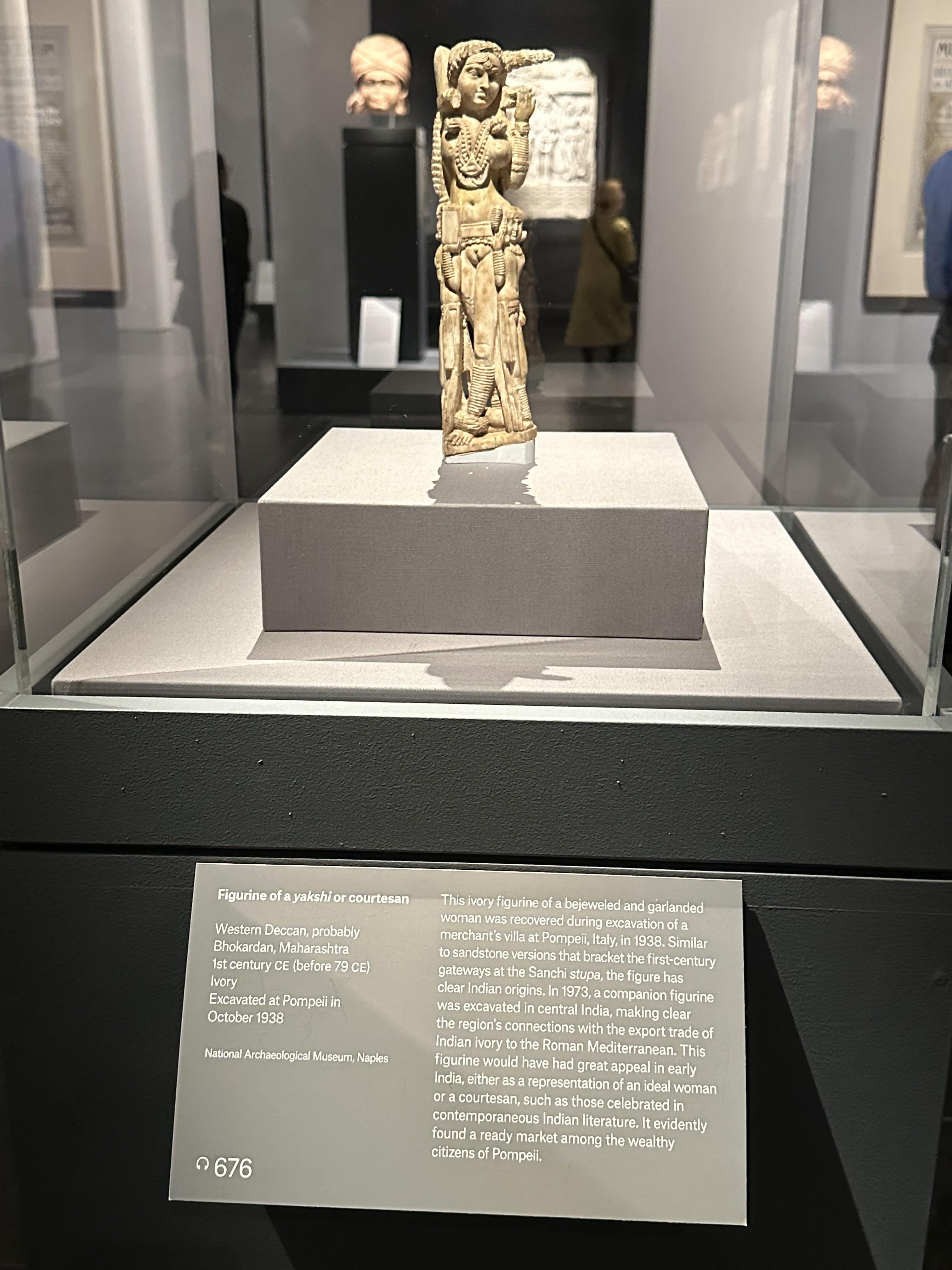
Two objects on display prove that a thriving trade existed with Rome. The first is a Roman bronze of the sea deity, Poseidon, excavated in 1944 (with other metal Roman items) in the town of Kolhapur, near Pune, Maharashtra. The second is a beautifully carved ivory figurine of a young woman of Indian origin (probably a courtesan) clad only in jewelry. Although made in India’s western Deccan region, she was discovered during the 1938 excavation of a Roman villa in Pompeii which was buried when the volcano erupted in 79 CE. In 1973, a companion figurine to the woman was excavated in central India, demonstrating that the region had a flourishing ivory trade with the Roman Mediterranean. 


Kudos to the Met!


The Met deserves praise for doing such a superb job of curating, mounting, and lighting the objects. A conceptual stupa at the physical center has a stupa drum and railing with a path that allows visitors to walk around. The exhibition rooms radiate around the stupa. The relics displayed here are from Piprahwa, excavated in 1898 near Buddha’s birthplace of Lumbini (Western Nepal today). These may be the most precious relics ever found in Buddhist India.  Soft chanting in the background piped into the enclosure helps to enhance the sense of quiet meditation.


Why did Buddhism Decline in India? 


There are several theories about why Buddhism so completely disappeared from the land of its birth. The resurgence of Brahmanical Hinduism by the 10th century was one of the chief reasons. As Vaishnavism and Shaivism became popular, upper caste Hindus pursued a relationship with the ruling families and persuaded them to adopt Hinduism as the state religion. Later Gupta kings may have taken this a step further and persecuted Buddhists. 


Other reasons include the emergence of multiple sects and the collapse of merchant and craft guilds that once patronized the monasteries and ensured the spread of the religion with the building of stupas and viharas. 


Most importantly, the monasteries had amassed wealth (in contradiction to the Buddha’s teachings), thus becoming a prime target for Afghan invaders from Ghazni and Ghor. Between the 10th and 12th centuries, their attacks caused the demolition of the famous universities of Vikramshila and Nalanda and the slaughter of many Buddhist scholars. 


Monks fled to Nepal, Tibet, and South India to escape pillage and death. After the monasteries were destroyed, the land was taken over by new rulers, thus blocking the return of the sangha (monastic order). Remaining lay Buddhists were incorporated into Hindu tradition. Soon after, a branch of Brahminical Hinduism began to proclaim that the Buddha was the ninth avatar (incarnation) of the Hindu deity, Vishnu, contributing further to the demise of a once great religion. It should be noted that Buddhism rejects the formal rituals, caste system, and priests of Hinduism but perhaps the most important difference is the rejection of the idea of a creator god. 


Art Professor


I went to the exhibit with Alakananda “Alka” Mukerji of Manhattanville College, a private university in Purchase, NY. I met her at a reception in the Indian Consulate General. She is professor and chair of the Manhattanville College Studio art department and a prolific painter herself (see below weblink). 


Alka pointed out an intriguing feature in the sculptures. Some of the women have thick bands or bracelets around their ankles, going halfway up their legs. If nothing else, the movement of these women would have been seriously impeded and we were wondering if these (metal or wooden) bands were merely decorative or a sign of oppression and control.


Alka looks for talented artists at museums whom she recruits to teach her students to draw. We ran into one such creative person, Dwight LaMarr DenorgĂ© Williams of Tennessee who was expertly sketching European sculptures in a corner and selling reproductions of his work. Check him out below. 


Ludi Joseph

New York 

October 8, 2023


Weblink to Alka’s artworks:

http://alakanandamukerji.com/w/


Naga Mucalinda Pillar, Pauni, Mahar.

Pillar Medallion, Bharhut, M.P.

Yakshi, Amaravati, A.P.


Yaksha Padmanidhi, Nagarjunakonda, A.P.

Flaming Pillar, Nagarjunakonda, A.P.

Royal Worshipper, Amaravati, A.P.

Indian Girl Excavated at Pompeii, Ivory
Dharm Wheel, Bharhut Stupa, M.P.

Stupa Drum Panel, Nagarjunakonda, A.P.

Lion Capital, Kushana, Mathura, U.P. 

Frieze from Phanigiri Monastery, Telengana
Veneration of the Buddha as a religious icon

Buddha in Human Form

Artist Dwight Williams Displaying Benzoni Sketch

Tuesday, December 13, 2022


Mum: the Fulcrum of our Lives!


Mum’s can-do spirit was the essence of her being! She always had plans for the future, people to meet, home improvements to undertake, closets to clean, new recipes to try — she never stopped! Last Christmas I helped her bake fruit cakes and cookies with all the endless cutting and mixing, not once, but thrice! 


She was born in the Portuguese territory of Goa on India’s west coast. Her family were Roman Catholic for many generations and were probably converted at the time of the mission to India of Spanish Jesuit, St. Francis Xavier — more than 400 years ago! She was always an Indian loyalist but would’ve been disappointed that Portugal lost in the FIFA World Cup!


Loreto Convent


She and her older sister Millie went to Loreto Convent school in Entally, Calcutta, then British India, more than a thousand miles from Goa. It was a boarding school, Mum was 8 or 9 years old, spoke no English, and only saw her folks once a year. Loreto is known for its Irish nuns and one famous non-Irish, the Albanian-born Mother Teresa (now Saint Teresa), who began her career teaching Bengali and Hindi at Loreto! Mum traveled to Calcutta many years later (as did I) to get a special blessing from Mother Teresa. She also received blessings from a few Popes although not from His Holiness the Dalai Lama, as I used to kid her — I got that during a holiday in Dharamsala, Himachal Pradesh where the Dalai Lama still lives after he fled Tibet ahead of the 1950 Chinese invasion.


Indus Valley


When Mum met my Dad, he was at St. Xavier’s College, Mumbai (Bombay), doing his thesis on deciphering the Indus Valley script under ancient civilization expert, Fr. Heras, a Spanish Jesuit. She was with the British Indian Railways, one of the first Indian women to work for them. They moved to Lucknow where Mum joined the South Vietnamese Consulate and later to New Delhi where she worked for U.S. A.I.D. agencies, Wheat Loans to India and the National Science Foundation. 


Although Dad’s book on the Indus Valley script was published many years later, he spent his early days in Delhi writing articles on Tamil culture, Mohenjodaro and Harappa, and “middles” for newspapers, which Mum prepped for publication. She was very proud of how well Dad was regarded in academic circles. One of the VIPs who came to pay his respects was Mexican poet-diplomat, Octavio Paz, who was ambassador to India at the time; us kids were captivated with his liveried driver and car flying the Mexican flag! Paz later won the Nobel for Literature.


Life in Vikram Vihar


We lived in Vikram Vihar, Lajpat Nagar. Our Block had a great community of kids that grew up together with most of us going to the same school, Frank Anthony’s, playing Cricket, Dog and the Bone, Kabbaddi, and Rounders in the playground outside our homes. Some evenings we would gather on our next door neighbor Mr Dawes’ “charpoy” (cot), strategically placed to catch unsuspecting passersby! He always addressed Mum as “Memsahib” and his jokes made her (and us) blush! Dick, another friend, would bring his guitar and we would sing along to old songs by Pat Boone and Jim Reeves: “Speedy Gonzales” was a fave! The Block celebrated Christmas, Eid-ul-Zuha, Lohri, Holi, Dussehra, Durga Puja, Diwali; neighbors shared trays of homemade food and desserts while children and parents (including mine) participated enthusiastically in the tradition.


Christmas Cake!


At Christmas time, Mum and her BFF-school pal, Margaret Baker, would get together to bake a huge batch of fruit cake. In America, everyone makes jokes about fruit cake (what’s that about?) — I’m referring to the rich, fruity British Indian (Caribbean) variety! Mum would get the ingredients together while the rest of us, Dad included, were roped in to wash, dry, and cut the candied fruit and nuts. The flour, sugar, eggs, butter, rum, brandy, and spices were taken to a baker in Jor Bagh market who had been warned in advance. He deftly mixed the ingredients while Mum and Aunty Margaret helped. It had to be baked outside our home as quantities were so large. I remember going with them one time and getting scolded by the baker for beating the batter in the wrong direction! (“Kya kar rahe ho beta?” What are you doing, child?) which earned me another scold from Mum! We returned home with tin trunks each holding 20-30 pounds of cake which we distributed to friends and neighbors on Christmas morning and mailed to my grandmother in Goa. 


Passings


Mum moved to New York in the 80s followed by my brother Leslie, my sister Lorna, and moi. Sadly, Dad had passed away while we were studying. So did many of our neighbors: the Karambelkars (also Jayant and Mangal), the Georges, Mr Vajpai who took the most evocative b/w photos, our teacher Mr Andrade, the Banerjees, the Dawes’, the Sunderams (and their son Govind), the Sehgals, and non-Block dwellers: Dick, Indus, and Carl. Many had moved away or emigrated: to Oz (Jimmy, Sushma), to Norway (Twinkle, Teddy, Paddy), to Canada (the Sunderams), and many (like us) who came Stateside.


My Old Lady!


In New York, Mum began with a big law firm, then worked with a religious order (Dominican Charities), and later volunteered at the parish church: preparing food packages for the poor and visiting disabled parishioners to pick up groceries. As Leslie said in his Eulogy during the Funeral Mass, many of them were years junior; in fact, one of them was 20 years younger, but Mum still referred to her as “my old lady!” 


We traveled with Mum on many memorable trips: to Egypt, France (Lourdes), Hawaii, the Bahamas, Atlanta and Sydney for the Olympics, an Alaskan cruise, California, New England, Miami, Savannah, and Charleston. She was always up for an adventure and hated being home alone! As Lorna said, she loved to “loaf around!” Such a “desi” expression! 


Mum had a fall, April 2021, and broke her right shoulder. She refused surgery although therapy helped. I spent most of the last 18 months with her in Flushing. She would always make plans about who to meet next, never mind her state of health! It is sad that she never got to see her dear friend, Subramanian Iyer (Uncle Subru to us) from her U.S. Embassy days. She was happiest when surrounded by family and loved to see her only grandchild, Lori.


Farewell!


We finally laid Mummy to rest on December 10 with the Wake/Visitation the previous evening. I think she would have liked the elegance of the sendoff! Msgr. Edward Wetterer spoke eloquently at the Wake as did Mum’s only surviving brother, Msgr. Nicholas Soares, who also celebrated the Funeral Mass with Fathers Vincentius Do and Jaime Hernandez at St. Michael’s Church in Flushing. Most of Mum’s family (the Soares clan in New York) were present, including her youngest sibling, my aunt Laura Doyle, and other friends and church volunteers who worked with her. The hymns chosen, Nearer My God To Thee, Abide With Me, Precious Lord, Take My Hand, and How Great Thou Art were meaningful: the first two (along with Lead Kindly Light) were favorites of Mahatma Gandhi who played them when he was incarcerated by the British during India’s freedom struggle. Abide With Me (until recently, when it was deemed too Colonial!) was played at every Beating The Retreat in Delhi, a symbolic ceremony that occurs a few days after the Republic Day Parade in January. 


Mum was one tough lady, indestructible to the end! At times her health seemed to decline but her unflagging spirit was such that she would always rally — to our delight and the surprise of her doctors — until she did not. We were privileged to have her in our lives for many years. She had a spark and a warmth that she shared with all. She leaves a void. 


Ludi Joseph
New York
December 12, 2022

Cell: 202-360-0692


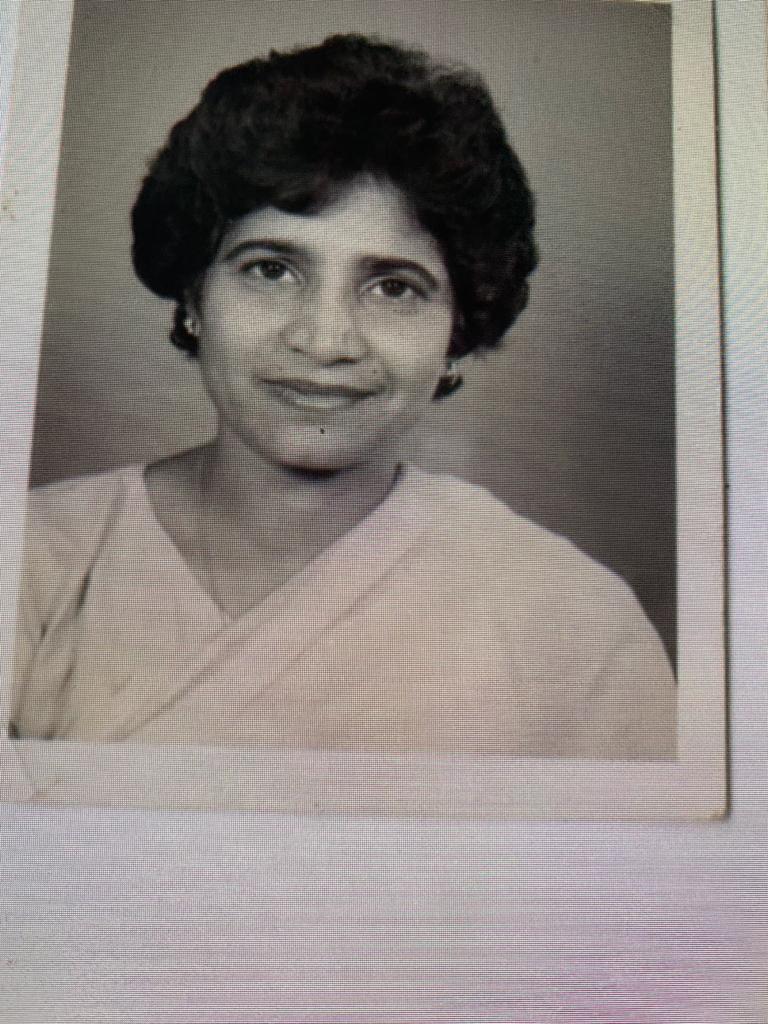
Mum as a young woman

Mum in Miami, 2018


Mum at home

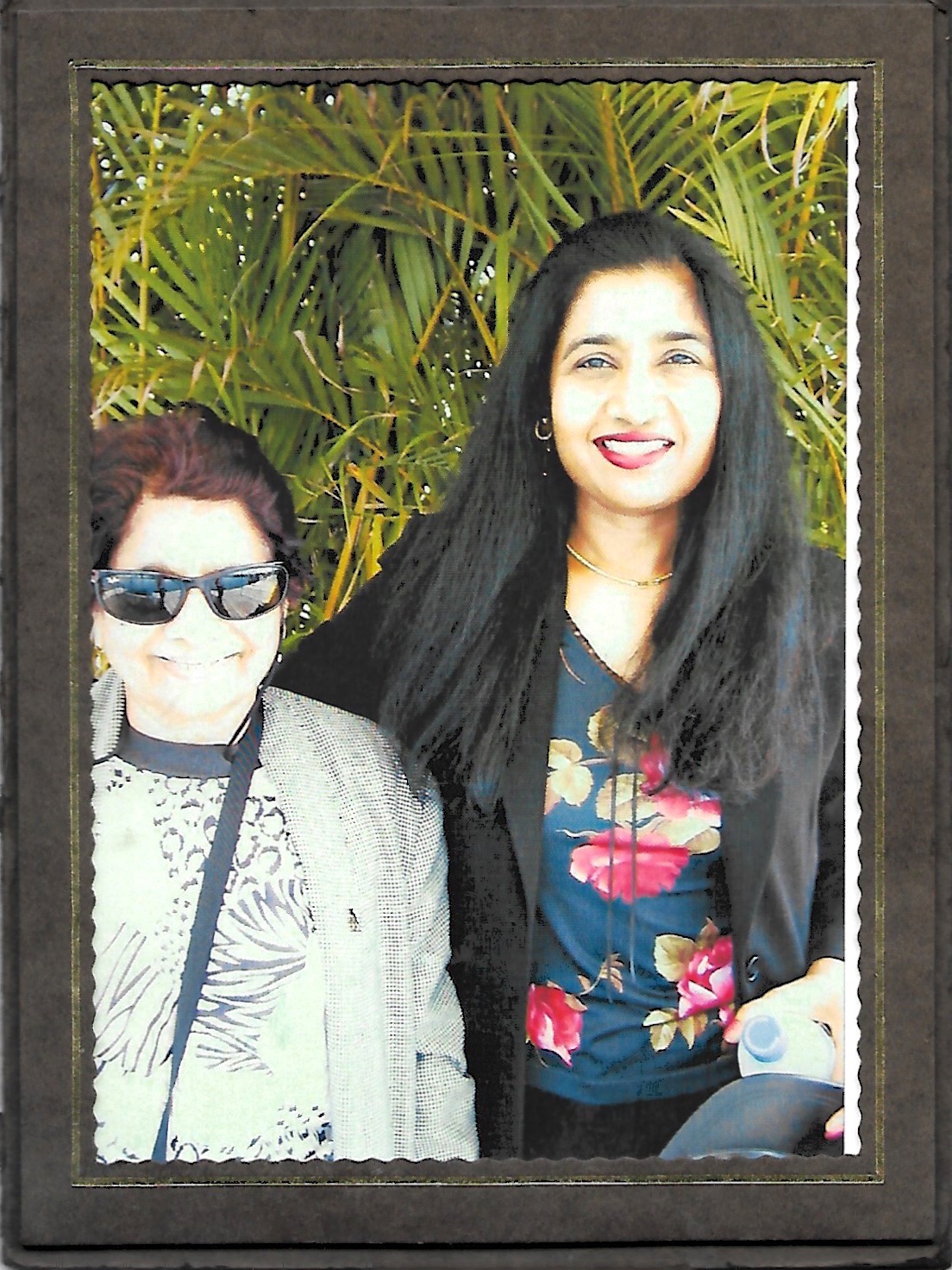
Mum and Ludi


Mum and Lorna


Lori, Kathy, Leslie


Lori, Mum


Kathy, Leslie, Mum
Mum and Leslie


Mum and Moi in the Bahamas


Mum and Dad’s Wedding Picture
Above: Ludi, Lorna, Leslie
Below: Ludi, Mum, Leslie, Dad, Lorna
(Pics by Mr. Vajpai)


Ludi, Leslie, Lorna in Delhi (pic by Mr. Vajpai)


Mum and Leslie in Delhi


Friday, April 22, 2022


Remembering Uncle Phil!     


We lost my youngest uncle Phil Soares on April 15. The day was both Good Friday and Passover and, some might say, perhaps an auspicious day to go.  


Monsignor Edward Wetterer, now retired — who used to be with St. Michael’s Parish in Flushing, NY and knew Phil well — wrote in a text to my mother, “Dear Evelyn and Family, Your brother Phil has a special place in my heart. Good Friday: what a beautiful day for his passing from this world! He’s in good company.  Blessings, Monsignor Edward.”


The Dashing Young Man from Das Island!


My earliest memories of Phil are of a dashing young man who visited us when we lived in India. As school kids, we were intrigued with his yarns and tall stories! No women were allowed on Das Island (in the Arabian Gulf) where he worked. So, while staying with us in New Delhi, he made up for lost time by meeting up with his many, many girlfriends! 


I remember this pair of stylish cat-eyed  sunglasses he gave me.  I have a picture (see below) of Uncle Phil and I standing together in bright sunlight in our Lajpat Nagar “compound” (courtyard).  I was all of 9 or 10 years old, in white shorts and tee, wearing said sun glasses, and feeling oh-so-proud! 


Phil was always the life and soul of the party! He had a quip and a joke about everything. Even when he lost his sight to glaucoma, he hardly missed a beat! He was my singing and often my ballroom dance partner at Soares family gatherings where we always initiated the “singalong.”


Golden Oldies and Konkani Songs 


We were continuing a tradition of singing Golden Oldies and Konkani songs at my aunt Laura’s house that was begun by my late Uncle Tony Soares who used to serenade my dearly departed grandmother “Mai” (Virginia Soares) with “mandos” (folk music) from her native Goa for Christmas, Easter, Thanksgiving, birthdays, and other family gatherings.


I found this photo from April 2017 of an Easter gathering with the four Soares siblings and two in-laws: Phil, Laura, Mum (Evelyn), Rev. Msgr. Nicholas, Aunty Blanche, Oscar — all smiling, all looking happy! Now a key member of that generation — one of the “intrepid six” — is sadly gone! 


We will miss you, Uncle Phil! It's time to rest peacefully! We celebrate you, always!  


Ludi Joseph

New York 

April 21, 2022


Note that much of the above text was read aloud at Phil’s funeral service on April 20, 2021. As a tribute to their dad, Phil’s daughters, Lynette and Joan, did a great job organizing the Mass, committal service, and lunch reception. It was very well done, right down to the Angel mementos! See family pictures below. 


Soares Siblings: Phil, Laura, Nicholas, Mum at Monsignor
Nicholas Soares’ 2014 Golden Jubilee, Staten Is., NY

Soares Siblings & In-laws, April 17, 2017: Blanche,
Mum, Fr. Nicholas, Oscar, Phil, Laura


Funeral Mass, April 20, 2021, St. Michael’s, Flushing, NY
With Monsignors Nicholas Soares and Edward Wetterer


At the Lunch Reception, April 20, 2021: A. Blanche, Oscar, Fr. Nicholas, Laura, Mum


At the Lunch Reception, April 20, 2021: Laura, Mum, Lorna


Father’s Day, 2021: Phil with his son, David


Lorna and I took Phil to Vote, Nov. 2, 2021


Phil with Family and Friends


Wearing the famous Cat-Eyed Sunglasses:
Phil and I in New Delhi, India