Tuesday, February 6, 2024

Missions of San Antonio

In the 17th century, Spain maintained evangelizing missions throughout its colonies of New Spain (Mexico and southwestern United States). Spanish missions in Texas or Tejas,  established mainly by Franciscan priests, spread the Christian Gospel among Native Americans and gave the Spanish crown a jumping off point to expand its overseas territories.  


Missions were first built in eastern Texas as a response to raids by 17th-century French explorer Sieur de La Salle followed by the first French outposts along the Gulf Coast and were meant to serve as a buffer against French incursions from Louisiana into Spanish territory. The Sabine River flowing north-south into the Gulf of Mexico became a border between French and Spanish colonies (as it is today between Louisiana and Texas) with Spanish missions moving west to San Antonio when threatened by indigenous  tribes. 


Resembling Village Life in Spain 


The aim of the Missions was to make a life that would resemble village life in Spain. Native Americans were introduced to animal husbandry, grist mills, fruit and vegetable cultivation, in addition to ploughing, weaving, tailoring, carpentry, and masonry. And, most importantly, they were taught Spanish, Latin, and Christianity. The ultimate objective was to convert indigenous hunter-gatherer folk into Catholic, tax-paying subjects of the King of Spain — in this goal, they certainly failed! 


In their heyday, Missions were self-sustaining communities that traded with their neighbors. Within the compounds, artisans produced cloth, hides, and iron tools. Outside the walls, melons, pumpkins, grapes, and peppers were grown in orchards, while farmers cultivated corn, squash, sweet potatoes, beans, and sugar cane in irrigated fields. Others reared sheep and cattle. 


There is little historical evidence of large scale resistance to Mission life by Native populations. Their previous hard scrabble existence  would have improved and Mission compounds would have offered protection from raiding Apaches and Comanches. 


Missions: Concepción, San Jose, San Juan, and Espada


In all, 26 missions were maintained for different lengths of time. Today four remain in San Antonio: Mission Concepción, Mission San Jose, Mission San Juan, and Mission Espada. With the exception of San Jose, the others were established in 1731. 


San Jose, known as the Queen of the Missions, is the most complete and reconstructed. Remains of the historic convento or friary, grist mill, granary, soldiers’ quarters, family housing and more, can be seen. It is also the oldest Mission, established in 1720.


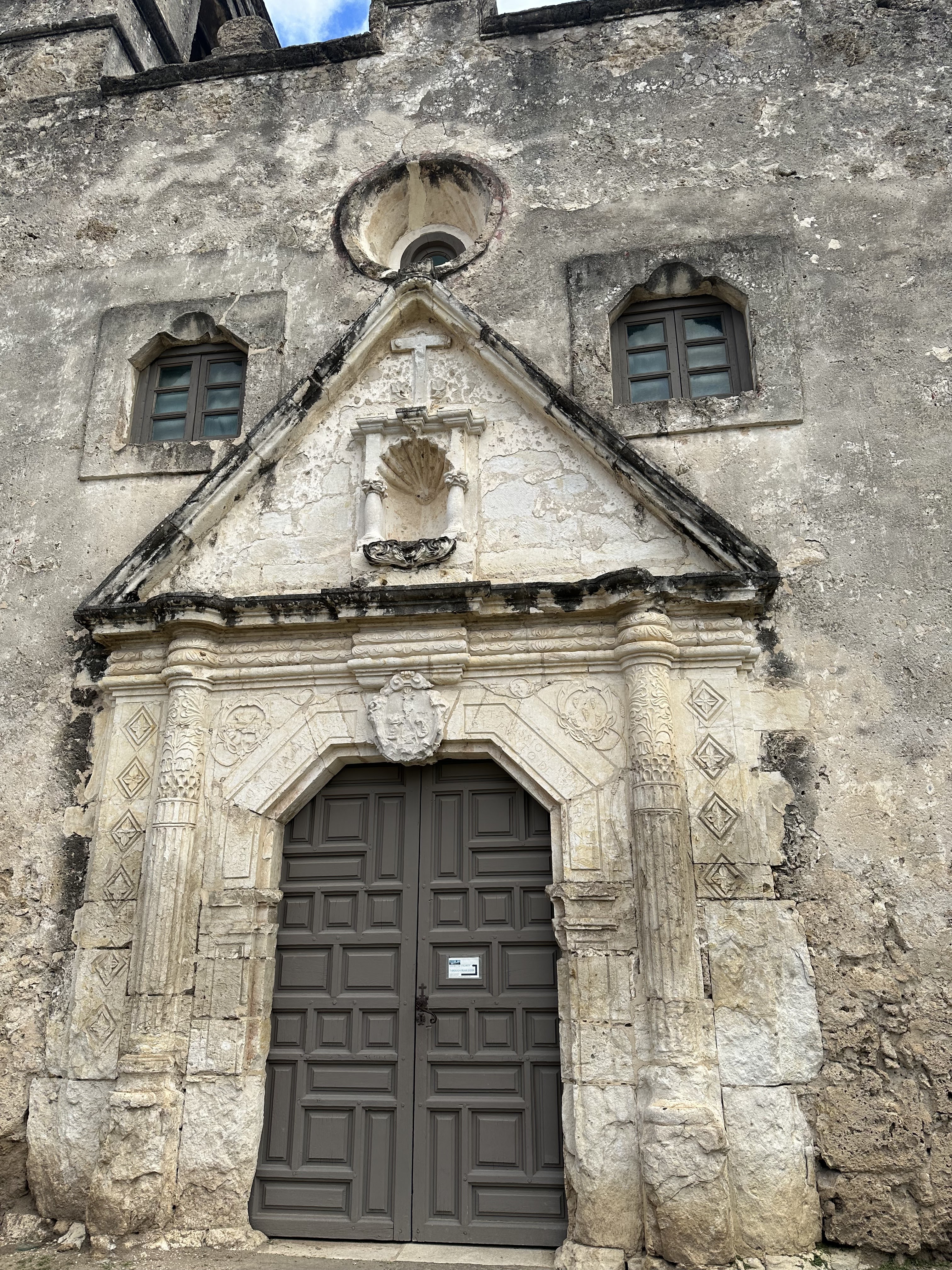
Mission Concepción is the oldest unrestored stone church in America. Its structure and architectural features are original. It has a fresco showing a drawing of the sun, meaningful to Native Americans. This fresco may have served as a precursor to more Christianized iconography and symbols. 


Mission San Juan, in the mid-1700s, was a regional supplier of agricultural produce with its rich farm and pasture lands. It established a trade network stretching east to Louisiana and south to Coahuila, Mexico. It’s thriving economy safeguarded it against attacks in its final years.


Mission Espada is famous for an aqueduct constructed by the Franciscans in 1745. It brought water to farmlands traveling in an acequia (irrigation system) from the San Antonio River over a low elevation creek, to maintain the elevation and potential energy of the water.


Secularization


Communities were expected to reach a point of maturity when no special Mission status was needed and they could transition into colonial society. This transition was called "secularization." It meant that the Mission’s communal properties and land were transferred to Native people, while religious duties were transferred to the diocesan church. Most Missions became secularized in the last decades of the 18th century.


Failure of the Mission System 


The Mission system was developed in the first place to avoid placing control of Native American populations in the hands of civilians and soldiers which had resulted too often in starvation, abuse, and enslavement of indigenous people. 


The Missions were comparatively successful for 80 years — until authorities in Spain pulled their funding. Their earlier success could be attributed to the fact that there was not one tribe to deal with but many tribes, all reckoning with a powerful common enemy, Lipan Apaches and Comanches — who raided from time to time looking for grain and horses. 


In the end, the Mission system was not politically or socially sustainable or strong enough to protect Native Americans against the growing power of ranchers and other business interests that sought control over Mission lands. By 1850, all Missions still operating in Texas were officially secularized. 


Perhaps the only reason that indigenous people in Texas largely escaped officially sponsored genocide by Anglo-American settlers (suffered by their brethren in California) was because there was no discovery of gold — as there was in California. 


Spanish Legacy


Despite the limited nature of Spanish colonization in North America, its influence in Texas remains extensive. Many counties in southern and western Texas have majority Spanish-speaking populations. Cities and rivers have Spanish names and Spanish architectural concepts flourish. 


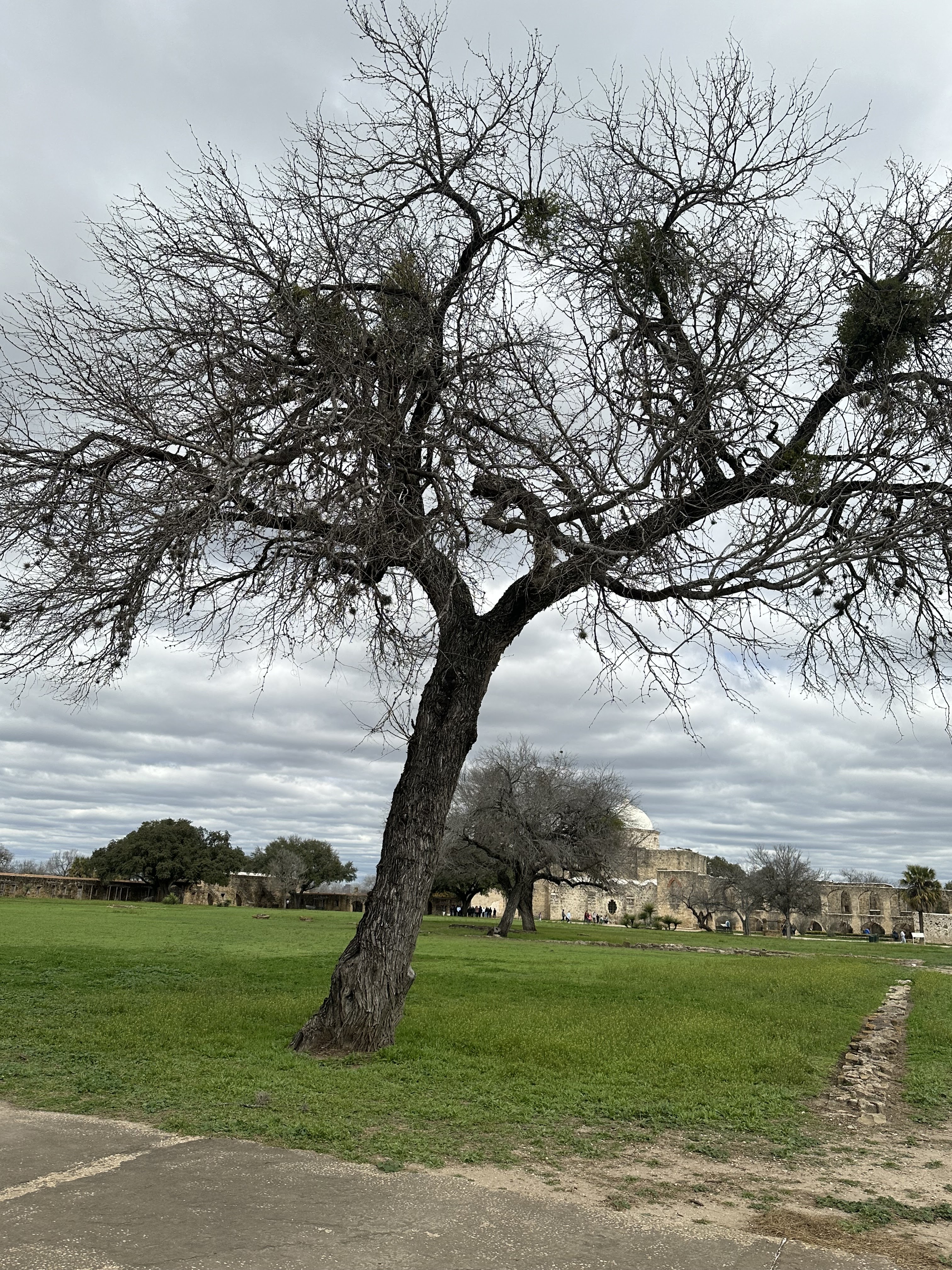
Early Spanish farmers who tilled and irrigated the land, changed the landscape. Grazing of European livestock caused mesquite trees to spread inland, replacing native grassland. European diseases brought by the Spanish decimated Native American people, leaving a population vacuum filled by Anglo American settlers. 


Mission farming relied on gravity-powered acequia or irrigation systems that used dams, aqueducts, and ditches to divert water from the San Antonio River to the fields. The Espada Aqueduct is the only remaining Spanish aqueduct in the U.S. and is still in use!  It is one of the more enduring legacies of Spanish rule. 


Coahuiltecan 


The people who lived on the Missions were known as Coahuiltecan. The term is derived from an Aztec or Nahuatl word and was the collective name that Spanish colonists gave to the various hunter-gatherer tribes in Texas and northeastern Mexico. 


The Coahuiltecan were small autonomous bands of indigenous people who inhabited the Rio Grande valley.  First encountered by Europeans in the 16th century, their population dwindled rapidly as a result of disease, slavery, and wars. 


Mestizo


Missions were guarded by Spanish soldiers whose relationships with indigenous women led to the creation of a new ethnic group, the Mestizo, who spoke Spanish, were staunchly Catholic, and remain so to this day. While they say they are saddened that their languages and culture were obliterated, they are happy to have inherited vocational skills from their forefathers who lived on the Missions and to have an identity that straddles both cultures.  


Many San Antonio residents trace their family heritage to these Missions. My guide, Matt, who claimed to be Mestizo on both sides of his  family, told me that indigenous people have straight hair on their heads and no facial hair. According to him, his own moustache and slightly wavy hair were proof of his mixed ancestry!


The term Mestizo is not used for official purposes. Hispanic Americans are classified by language rather than ethnicity. 


Sunday worship continues at all four Missions. According to Matt, services are popular and crowded and it’s always a challenge to find parking. 


Gente de Razón


Gente de Razón (people of reason" or "rational people") was a term used by Spain in its colonies to refer to people who were culturally Hispanicized, that is, they had accepted Spanish rule and Christianity. It referred to indigenous people who maintained their culture and lived in their legally recognized communities as well as mixed-race people (castas). The poor in urban centers who clung to indigenous beliefs were considered not to be gente de razón; that is, they were gente sin razón (people without reason)!  


It is a term one hears a lot of while visiting the Missions. The people who still live in the area are proud to be gente de razón, proof that Spanish colonial legacy (however outmoded) still lives on! 


Ludi Joseph

San Antonio, TX

February 6, 2024


Espada Aqueduct

Mission Espada

Espada Chapel

Mission San Juan

Mesquite Tree with Ball Moss

Mission San Jose

Mission Concepcion

Rose Window, Mission Concepcion 

Chapel, Mission Concepcion

Sun Fresco, Indigenous Symbol 

Church Door, Mission Concepcion 


Videos:

Espada Chapel


Espada Aqueduct 


 San Antonio Riverwalk


The Riverwalk is unique to San Antonio and one of the biggest attractions in Texas! Designed by visionary architect Robert Hugman, it was conceived in the 1920s to prevent flooding which had caused many deaths and for urban renewal, as per 21st century jargon! But then the Depression hit and the city ran out of money. Finally built in the 1940s under Roosevelt’s New Deal WPA (Works Projects Administration), the design “straightened” some of the famous river bends (meanders) by building bypass channels and small dams to regulate water flow — there’s been no flooding since! 


Many other U.S. and international cities have tried to copy San Antonio’s Riverwalk with different degrees of success. I can think of London and Singapore, both much larger. In my opinion, none have the same concept of winding limestone pathways and arched bridges flanking the river with wrought iron signage and semitropical landscaping giving a unique perspective to the city’s downtown, creatively lit up at night. 


Architecture


There have been several extensions of the Riverwalk since (including with the city’s hosting of the 1968 World’s Fair) connecting more of the attractions. All along the meandering stone pathways, one sees luxury hotels and apartment buildings weaving seamlessly into the architecture — on first glimpse, several seem to hang precariously over the water! 


One hotel, we were told, was built in self-contained units like building blocks, using modular design down to furniture and TV sets. Each unit was carefully stacked up, one on top of the other and lowered by crane. The building is apparently sturdier than anything else on the river and is featured in the Guinness Book of Records!  


Commercial boat and barge tours have been operating on the Riverwalk for several years — for recreation and transport. The river is regularly patrolled by police. Strict laws have kept the water looking (mostly) pristine with regular cleanup of the muddy river bed although it might be different in summer with holiday crowds and drunken revelers! 


Staircases and Bald Cypresses


Another unique feature designed by Hugman are the many (25 plus) intricate stone staircases, each of them distinctive or one of a kind, connecting the Riverwalk to street level. 


I also loved the bald cypresses, many of which are several hundred years old! Some are surrounded by “knees” or little oddly-shaped knobby tree protuberances that naturally grow out of the ground — for the express purpose, we were told — to allow the tree to breathe!  


Spurs


The city’s basketball champions, the San Antonio Spurs, have had their five NBA victory parades/cruises along the Riverwalk. 


The water is rarely more than three or four feet deep (although some parts are more than 20 feet) and even if tourists (or their phones) fall in, they are fished out safely!


Hugman Fired!


For his pains, Hugman was fired from the Riverwalk project prior to ground breaking, being accused of using too much money and too much stone! Sanity prevailed a few years later when he and his contributions were reinstated before his death. 


Hugman’s initial plan included gates and commercial shopping that would draw on the city’s Spanish heritage in the same way that New Orleans had drawn on its French architectural heritage. He wanted to incorporate colored boats like the “gondolas of Venice, only with Spanish design.” But his designs were too avant-garde for the city’s elders who were afraid that the bright fancifully-patterned limestone he proposed using would be a source of ridicule - little did they know! 


Hugman remained adamant that the limestone would mellow and that landscaping would soften any harsh effects. He was prescient, of course. To his dismay, the committee unanimously removed him from the project. But most of his key elements were already in place, and the architect hired to replace him (J. Fred Buenz) worked around them.


Hugman Reinstated!


In 1970, as the River Walk was becoming commercially successful, Hugman was rediscovered and honored with an award from the San Antonio Chapter of the American Institute of Architects.  


In 1978, he did the first striking of the bells named in his honor and hung at the Arneson River Theater. He died in 1980 and was buried in City Cemetery. 


Stewart


Our guide Stewart (a laidback Australian settled in San Antonio) really brought the stories home! His narrative was full of wry anecdotes of the city’s history.


One famous temporary resident was American country singer song-writer, Johnny Cash, he of the distinctive bass-baritone. Johnny romanced local beauty Vivian Liberto, just before he went to war. He returned and they married in 1934. Sadly, they did not live happily after. His life and career dissolved in booze and drugs. They split and wed other people. Johnny and Vivian’s oldest daughter Roseanne is also a well known country singer. Vivian was the inspiration for Johnny’s first hit single, “I Walk the Line” — also made into an excellent film starring Joaquin Phoenix and Reese Witherspoon.


Johnny’s Bench 


Stewart told us a funny anecdote about a favorite wooden bench on which Johnny carved his and Vivian’s initials when they were courting. Many years after his death, Vivian sought out the bench and found it on the Riverwalk. She tried to buy it but the city declined. It’s now stuck in a museum behind glass — where no one sees it. In its place is a copy! 


Other well-known residents have included black writers Alex Haley and Maya Angelou and current rap star Megan Thee Stallion. It is also the hometown of Tejano singer Selena who, in 1995 at age 24, was tragically gunned down by her friend and former manager. A bridge on the Riverwalk is named after her.


Ludi Joseph

San Antonio, TX

February 3, 2024


View of Riverwalk


Bald Cypress


Stoned Pathway 


Mariachis Entertain Diners


Sculpture of Cattle Drive


Robert Hugman, Architect 


Arched Stone Bridge


 Stone Staircase


Modular Designed Hotel


Trees Lit at Night


Night Lighting


Tree “Knees” let Trees Breathe


More Tree “Knees”


Crackle Birds at Riverwalk


Thursday, December 7, 2023

Goodbye Deepak! 


We lost former Frank Anthony School head boy, Deepak Kochhar, who passed away in New Delhi, December 5.  A few decades ago — when we were all bright-eyed and bushy-tailed high school students at Frank Anthony’s — Deepak was this tall, easy-on-the-eye young man who excelled in sports and was popular with both students and teachers, never mind the young girls crushing on him! 


His sudden passing is a reminder of one’s mortality and all those discomfiting thoughts we push to the back of our mind: death is looming for us all, perhaps not that far away! 


It struck me that Deepak’s passing is the first in many decades of a classmate. I recall others who died but that happened a long time ago when we still lived in India. There have been no passings in a while — hence the shock!


In 2014, when Lorna and I went to the first of many FAPS reunions, we were so happy to see Deepak and his wife Anita. I still remember Anita (also tall and imposing) striding ahead into the Dhaula Kuan Officers Club, closely followed by Deepak, calling out, “where is Lorna, where is Ludi? I’ve heard so much about them from Deepak!” 


We were of course touched that Deepak had remembered and spoken of us!  We visited them at their Greater Kailash 2 home and it was lovely to meet Anita’s mother and father who were both at the time in their late 90s (but now sadly passed).  


On the next trip to India in 2016, he’d just had eye surgery and couldn’t make it to any of the parties but insisted we meet him at home. We had a great time exchanging news of classmates and checking out his historic black and white pictures of high school! 


The next time we met was in November 2017.  He attended the reunion organized by former head girl Anupama Miglani Singh at the 5th Maratha Officers’ Mess. It was great fun to hear Deepak recall old times and talk about how he gave his blessings to next head boy and best friend, Raghu Rajendran, while opposing other less worthy candidates and how proud he was of Anu and the rest of us prefects for standing up to the faculty and supporting him!  It was all accompanied by much backslapping, bonhomie, and loud cheering from fellow students — a spirit one can only recapture with childhood friends!  


For those unaware of the details, Deepak lost his Frank Anthony head boy-ship over a kissing incident that got blown out of proportion! (I did say kissing; those were more innocent times)!  But he remained in high school, sat his Senior Cambridge finals, and graduated with the rest of us. 


I recall this wonderful afternoon party at his home (December 2017). It was outdoors under the fruit trees (jamun, mango, and maybe custard apple) in his back yard. It was a typical Delhi winter afternoon with balmy temps, almost clear skies, light breeze, the sun warming our backs! The food (bajre ki roti, sarson ka saag, moong daal halva) was excellent, and the drinks were flowing! He’d hired a Goan DJ (Edwin Fernandes) and a group of us — along with son Samir, daughter Diya, and Deepak’s brother Rajesh — were singing 70s pop songs (English and Bollywood)! 


That was the last time I saw Deepak in person. But he always kept in touch. He would ring every now and again to catch up and give us updates on his actor son Sam whom he was so proud of or send pictures of his grandkids! 


He also reached out to pay his respects to our Hindi teacher Mr Raj (based in New Jersey) who has lived in the U.S. for more than 40 years and is perhaps the only one of his generation still with us!


Deepak was always fun to be with, the life and soul of the party!  Farewell, dear classmate! You will be missed! 


Ludi Joseph

New York

December 8, 2023


Note: Head Boys, Head Girls, and Prefects (unheard of in America except in Harry Potter books and films!) are typical British public school constructs, modeled on Eton and Harrow, a leftover from the Raj!  Both Lorna and I were proud to be FAPS Prefects!  


Our school was founded by Frank Anthony, Anglo Indian leader at the time of Indian Independence. The several schools bearing his name are well known in India for maintaining a high standard of English medium education.


2017: Deepak and I at the FAPS reunion 


2014: Anita, Deepak, Lorna


2014: Moi, Deepak, Lorna

2017: Rajesh, Sam, Edwin (the DJ)


2017: Diya with Deepak’s mother, now 95


School Cricket 11. Deepak in the middle at the back


2022: Deepak at FAPS getogether 


2017: Deepak with Anita, Raghu, Anu
2017: Deepak and I at his house party